When we talk about health and longevity, the terms nutrition, food, and diet are often used interchangeably. However, they are not exactly the same. Nutrition refers to the essential macro- and micronutrients our bodies need to survive, while food is the source of those nutrients-primarily from plants and animals. Meanwhile, diet reflects not just what we eat, but how, when, and why we eat it.
In reality, we don’t eat nutrients in isolation-we eat meals shaped by culture, habits, environment, and personal preferences. These factors play a crucial role in shaping our overall health. Modern research in ageing highlights that food is one of the three key pillars of health, alongside physical activity and mental well-being.
This article explores how nutrition, food choices, and dietary patterns influence healthy ageing and longevity, and why the phrase “we eat what we are” may be more accurate than the popular saying “we are what we eat.”
Table of Contents
ToggleUnderstanding Nutrition for Healthy Ageing
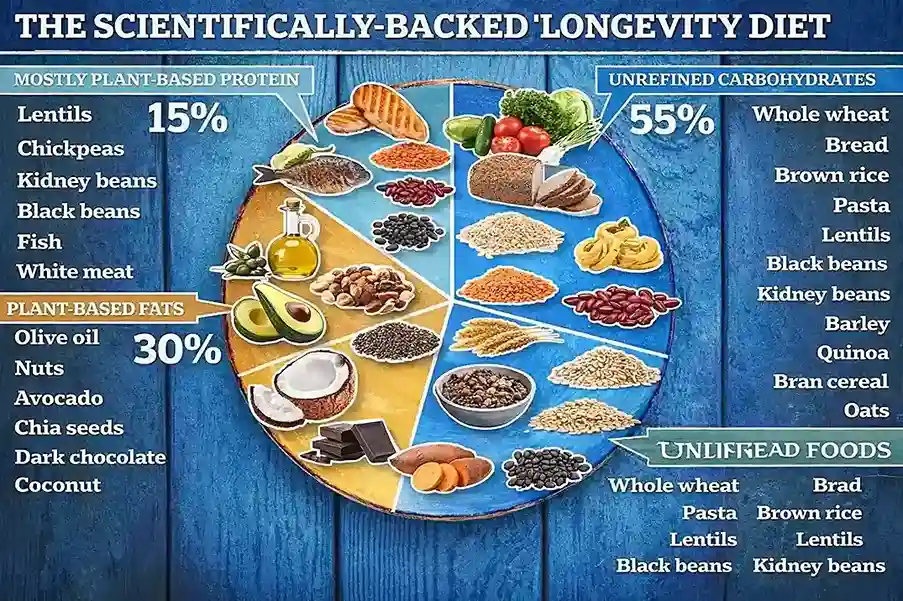
Macronutrients and Micronutrients
To maintain optimal health, the body relies on three primary macronutrients:
- Proteins – for tissue repair and growth
- Carbohydrates – the main energy source
- Fats (lipids) – essential for hormone production and cell function
In addition, micronutrients such as vitamins and minerals play a vital role in:
- Supporting metabolism
- Enhancing nutrient absorption
- Maintaining a balanced gut microbiome
A balanced intake of these nutrients is essential throughout life, especially as we age.
Nutritional Challenges in Older Adults
Ageing brings several physiological changes that can impact nutrition:
- Reduced appetite (anorexia of ageing)
- Decline in digestion and metabolism
- Loss of taste and smell
- Difficulty chewing or swallowing
Additionally, medications commonly used in older adults can interfere with nutrient absorption. For example:
- Some diabetes medications may reduce vitamin B12 levels
- Diuretics can lower potassium levels
- Antacids may affect calcium and magnesium absorption
These factors can lead to nutritional deficiencies, making it essential to adjust dietary intake and consider supplementation when necessary.
Food Choices and Their Impact on Longevity
There Is No “Perfect” Food
Despite ongoing debates, there is no single food that guarantees health or longevity. The nutritional value of food depends on:
- Farming and production methods
- Preparation and cooking techniques
- Food combinations and processing
Cooking methods like boiling, fermenting, or roasting can significantly influence nutrient availability and safety.
The Role of Functional Foods and Hormesis
Modern nutrition science has introduced the concept of functional foods-foods that provide additional health benefits beyond basic nutrition. These include:
- Fermented foods (for gut health)
- Anti-inflammatory foods
- Brain-boosting foods
Another important concept is hormesis, where small amounts of natural compounds (often found in plants) can stimulate the body’s دفاع mechanisms. These compounds, known as hormetins, may:
- Enhance cellular repair
- Improve stress resistance
- Support healthy ageing
Examples include phytochemicals like polyphenols and flavonoids found in fruits, vegetables, and spices.
The Rise of “Superfoods” and Nutraceuticals
The food industry has increasingly promoted products such as:
- Superfoods
- Nutraceuticals
- Functional beverages
While many of these offer genuine benefits, some claims are overhyped or not fully supported by scientific evidence. Consumers should approach such products with awareness and rely on balanced, whole-food diets.
Diet, Culture, and Lifestyle
Diet Is More Than Just Food
A diet is not just about nutrients-it’s about culture, tradition, and lifestyle. Popular dietary patterns include:
- Mediterranean diet
- Ketogenic diet
- Vegan and vegetarian diets
- Paleo diet
Each of these reflects different cultural, ethical, and health perspectives.
The Importance of Meal Timing (Chrono-Nutrition)
Emerging research shows that when you eat is just as important as what you eat.
Key concepts include:
- Circadian rhythm – the body’s internal clock
- Intermittent fasting (IF) – alternating eating and fasting periods
- Time-restricted eating (TRE) – limiting food intake to 8–10 hours daily
Benefits of proper meal timing may include:
- Improved metabolism
- Better blood sugar control
- Enhanced weight management
- Support for longevity
Dietary Strategies for Healthy Ageing
Caloric Restriction and Intermittent Fasting
Scientific studies suggest that caloric restriction (CR) and intermittent fasting can:
- Reduce the risk of metabolic diseases
- Improve cellular repair mechanisms
- Potentially extend lifespan
Time-restricted eating, in particular, is gaining popularity because it is:
- Easier to follow long-term
- Flexible and practical
- Supported by early clinical research
Balanced and Sustainable Eating Habits
For long-term health, focus on:
- Whole, minimally processed foods
- A variety of fruits and vegetables
- Adequate protein intake
- Healthy fats
- Proper hydration
Consistency and balance matter more than strict dieting.
The Future of Nutrition and Longevity Research
Modern science is moving toward a more personalized approach to nutrition, including:
- Nutrigenomics – how food affects gene expression
- Nutrigenetics – how genetics influence dietary response
Future research aims to integrate:
- Molecular biology
- Physiology
- Cultural habits
- Individual preferences
This holistic approach will help develop more effective strategies for healthy ageing and disease prevention.
Conclusion: We Eat What We Are
Food is more than just fuel—it is deeply connected to our biology, culture, and identity. While scientific research continues to uncover the role of nutrients in health, real-life eating habits are shaped by accessibility, affordability, and tradition.
There is no universal “perfect diet.” Instead, achieving longevity requires:
- Balanced nutrition
- Healthy lifestyle habits
- Cultural awareness
- Informed food choices
Ultimately, the idea that “we eat what we are” highlights an important truth: our diets reflect not just our needs, but also our environment, beliefs, and way of life.
Key Takeaways
- Nutrition, food, and diet are interconnected but distinct concepts
- Balanced intake of macro- and micronutrients is essential for ageing well
- Cultural and lifestyle factors strongly influence eating habits
- Meal timing and dietary patterns impact long-term health
- There is no one-size-fits-all diet for longevity
Start Building a Healthier Lifestyle Today
Improving your health doesn’t require drastic changes. Start with small, consistent steps:
- Eat more whole foods
- Pay attention to meal timing
- Stay active
- Make mindful food choices
Over time, these habits can help you achieve better health, improved well-being, and a longer life.
Leave a Reply