In today’s always-connected world, it’s common to fall asleep with your phone right next to you—or even under your pillow. Whether you’re checking messages, scrolling social media, or catching up on emails, nighttime phone use has become a daily habit.
But what seems harmless can quietly sabotage your sleep and overall health. If you’ve ever struggled to fall asleep or wake up feeling tired, your smartphone might be part of the problem.
Let’s explore why you should ditch your phone before bed—and what to do instead.
Does Using Your Phone Before Bed Affect Sleep?
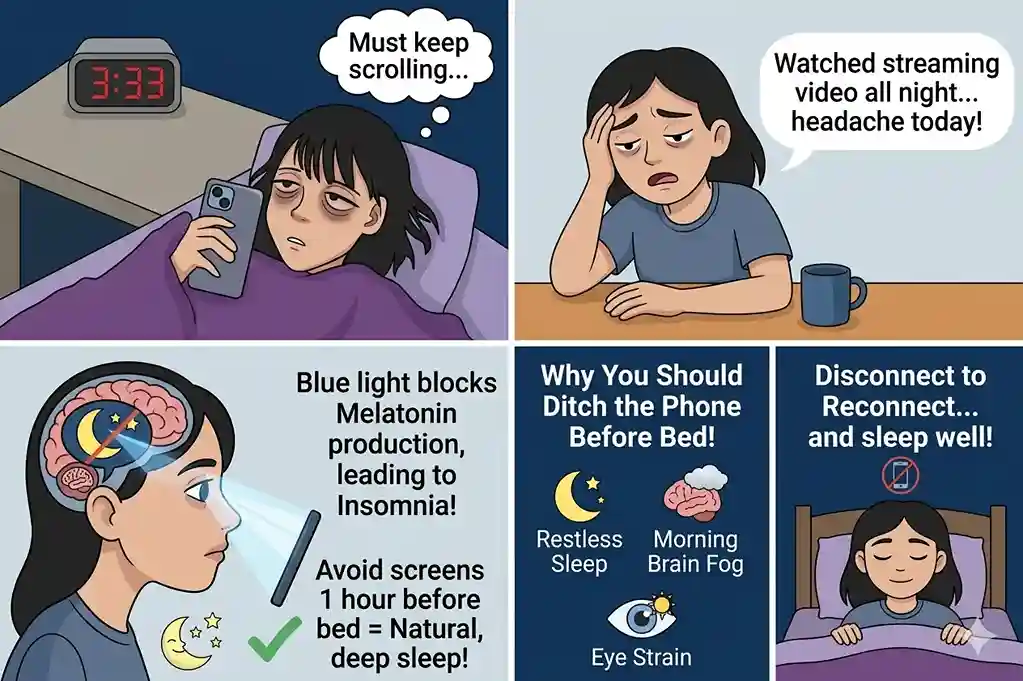
Yes—using your phone close to bedtime can significantly impact your sleep quality.
Activities like scrolling through social media, replying to messages, or reading emails stimulate your brain and keep it alert when it should be winding down. This can delay sleep and reduce the amount of deep, restorative rest your body gets.
Even worse, this habit can turn into a cycle: the more you use your phone at night, the harder it becomes to fall asleep without it.
How Your Phone Disrupts Your Sleep
1. It Keeps Your Brain Active
Before sleep, your brain needs time to relax. But when you check your phone, you’re feeding it new information.
- Notifications trigger alertness
- Social media keeps your mind engaged
- Emails and messages create mental stimulation
Even a quick check can make your brain more active and delay sleep.
2. Blue Light Affects Your Sleep Cycle
Smartphones emit blue light, which mimics daylight. While helpful during the day, it’s harmful at night.
Blue light can:
- Disrupt your circadian rhythm (internal body clock)
- Suppress melatonin (the sleep hormone)
- Make it harder to fall asleep
As a result, you may experience insomnia, daytime fatigue, and irritability.
3. Emotional Content Keeps You Awake
It’s not just the screen—it’s also what you’re consuming.
Scrolling through your phone can trigger strong emotions:
- Stress from news or work emails
- Anxiety from social media
- Excitement from engaging content
These emotional responses keep your mind racing and make it difficult to relax before bed.
4. Doomscrolling Delays Sleep
“Doomscrolling”—endlessly consuming negative or engaging content—can keep you awake far longer than intended.
What starts as “just a few minutes” can turn into hours of stimulation, pushing your bedtime later and reducing sleep quality.
How Long Before Bed Should You Stop Using Your Phone?
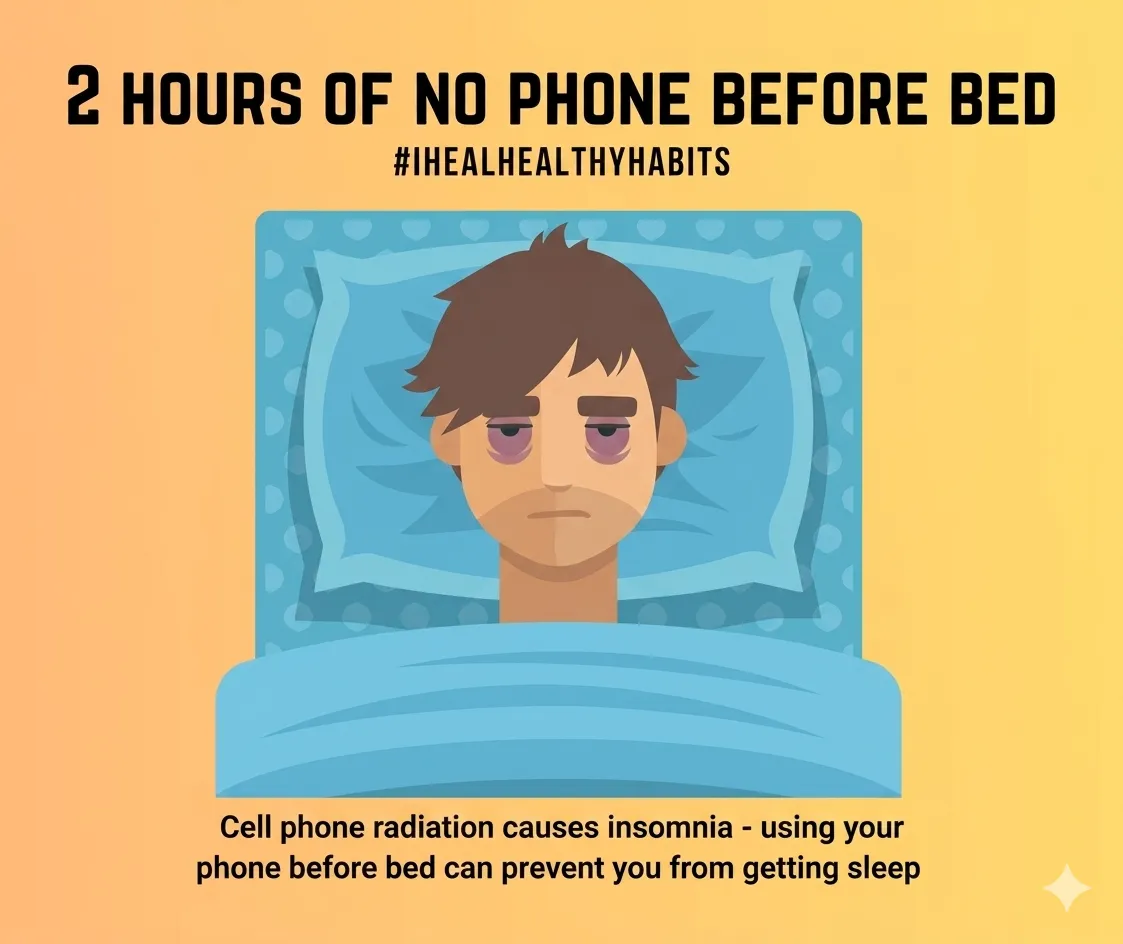
There’s no one-size-fits-all rule, but experts generally recommend:
Stop using your phone 1–2 hours before bedtime
This gives your brain enough time to unwind and your body time to produce melatonin naturally.
If that feels too difficult, start small:
- Reduce usage gradually
- Avoid stimulating content at night
- Switch to more relaxing activities
Tips to Reduce Phone Use Before Bed
Breaking the habit isn’t easy—but these simple strategies can help:
✔️ Put Your Phone Away
Keep your phone in another room or away from your bed to reduce temptation.
✔️ Use “Do Not Disturb” Mode
Silence notifications to avoid interruptions during the night.
✔️ Replace Screen Time with Relaxing Activities
Try:
- Reading a physical book
- Meditation or breathing exercises
- Listening to calming music
✔️ Create a Consistent Bedtime Routine
A regular routine helps your brain recognize when it’s time to sleep.
Final Thoughts
Your phone may keep you connected—but it can also disconnect you from quality sleep.
By reducing screen time before bed, you allow your brain to relax, your body to recharge, and your sleep to improve naturally.
Start with small changes:
- Put your phone down earlier
- Choose calming activities
- Build a relaxing nighttime routine
Over time, you’ll fall asleep faster, sleep better, and wake up feeling more refreshed.
Sometimes, the best thing you can do for your health is simply log off.
Leave a Reply