Staying hydrated is one of the simplest yet most overlooked ways to support your health. While you may not notice it immediately, even mild dehydration can quietly affect your energy, focus, digestion, and overall well-being.
Just like a plant perks up after being watered, your body performs best when it gets enough fluids. In this guide, you’ll learn why hydration matters, how to spot dehydration, and easy ways to build a daily water habit that actually sticks.
Why Hydration Is Essential for Your Body
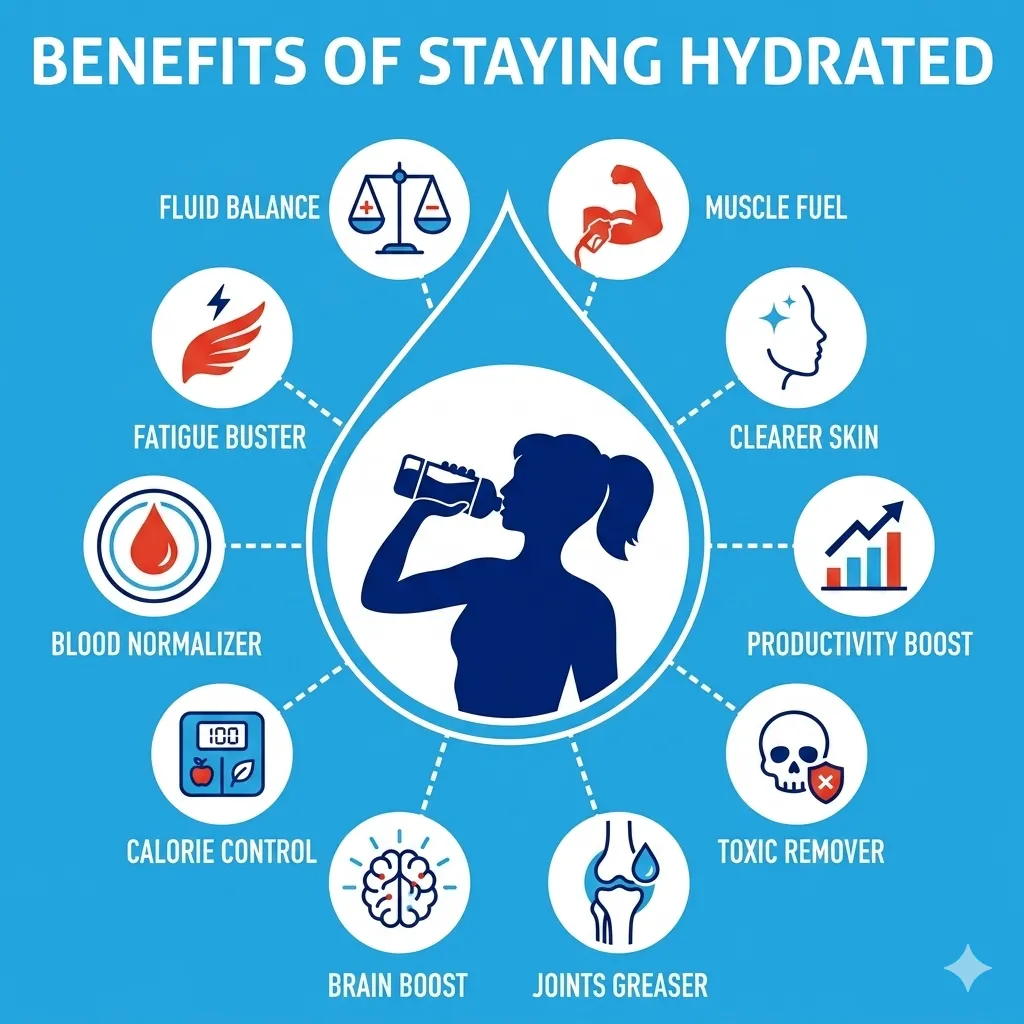
Water does far more than quench your thirst. It plays a vital role in nearly every function in your body, including:
- Regulating body temperature
- Transporting nutrients
- Supporting digestion
- Lubricating joints
- Removing waste
Even slight dehydration can lead to symptoms like fatigue, headaches, and poor concentration.
Your Brain Needs Water to Function
Your brain is highly sensitive to hydration levels. Since it’s made up of about 75% water, even a small drop can impact your mood, memory, and focus.
That afternoon slump you blame on lack of sleep? It might actually be your body asking for water—not another cup of coffee.
Hydration and Joint Health
Your joints rely heavily on water for cushioning and flexibility. In fact, cartilage contains around 80% water.
When you’re dehydrated:
- Joints may feel stiff
- Movement can become uncomfortable
- Physical performance may decline
Drinking enough water helps keep your joints smooth and supported.
The Role of Water in Digestion
Hydration is key for a healthy digestive system.
Water helps:
- Break down food
- Absorb nutrients
- Prevent constipation
If you’re experiencing digestive discomfort, increasing your water intake is often a simple and effective first step.
Signs You’re Not Drinking Enough Water
Thirst isn’t always the best indicator—it usually appears after dehydration has already started.
Here are common signs to watch for:
- Dark yellow urine
- Frequent headaches
- Dry skin or lips
- Fatigue or dizziness
- Muscle cramps
- Bad breath or dry mouth
Quick tip: Pale yellow urine usually means you’re well hydrated.
How Much Water Should You Drink Daily?
The common “8 glasses a day” rule is a helpful starting point—but hydration needs vary.
General guidelines:
- Women: about 11 cups per day
- Men: about 15 cups per day
This includes fluids from both drinks and food.
Factors That Increase Your Water Needs
- Exercise or physical activity
- Hot or humid weather
- Cold, dry climates
- Certain medications
- Overall body size and metabolism
A simple rule: drink consistently throughout the day—don’t wait until you feel thirsty.
Simple Daily Habits to Stay Hydrated
Building a hydration habit doesn’t have to be complicated. These practical tips can make it easier:
1. Start Your Day With Water
Drink a glass of water as soon as you wake up to rehydrate your body after sleep.
2. Keep Water Visible
Having a water bottle nearby increases how much you drink without thinking.
3. Link Water to Existing Habits
For example:
- Drink water before meals
- Take a sip after using your phone
- Hydrate after bathroom breaks
4. Make It More Enjoyable
Add flavor with:
- Lemon or lime slices
- Cucumber or mint
- Fresh fruit
5. Start Small
If you struggle, begin with one extra glass per day and build from there.
Hydration Beyond Drinking Water
Water isn’t your only source of hydration. Many foods and drinks contribute too:
Water-Rich Foods
- Watermelon
- Cucumber
- Strawberries
- Lettuce
Other Hydrating Options
- Soups and broths
- Herbal teas
- Milk and plant-based drinks
Even coffee and tea contribute to hydration when consumed in moderation.
Special Situations That Affect Hydration
Older Adults
As we age, thirst signals weaken, increasing the risk of dehydration.
Children
Kids need more water relative to their size and benefit from regular hydration for focus and learning.
Active Individuals
Exercise increases fluid loss, so additional water is essential—especially in hot weather.
Health Conditions
Conditions like diabetes or heart issues may require careful hydration management.
When to Seek Professional Advice
If you experience ongoing symptoms like:
- Persistent thirst
- Dry mouth
- Dark urine despite drinking fluids
It may be time to consult a healthcare professional.
Hydration is simple—but when something feels off, it’s important to investigate further.
Final Thoughts
Hydration is one of the easiest habits to improve your health—yet many people overlook it.
By drinking enough water daily, you can:
- Boost energy and focus
- Support digestion
- Improve physical performance
- Enhance overall well-being
Start small, stay consistent, and make water a natural part of your routine.
Leave a Reply