Many students struggle to remember what they study—not because they lack intelligence, but because they rely on ineffective methods. Memorizing information without understanding often leads to forgetting it quickly.
If you want to improve your memory and retain knowledge longer, the key is to use proven study techniques that work with your brain, not against it. Below are six powerful ways to help you remember what you study more effectively.
Table of Contents
Toggle1. Use Spaced Repetition
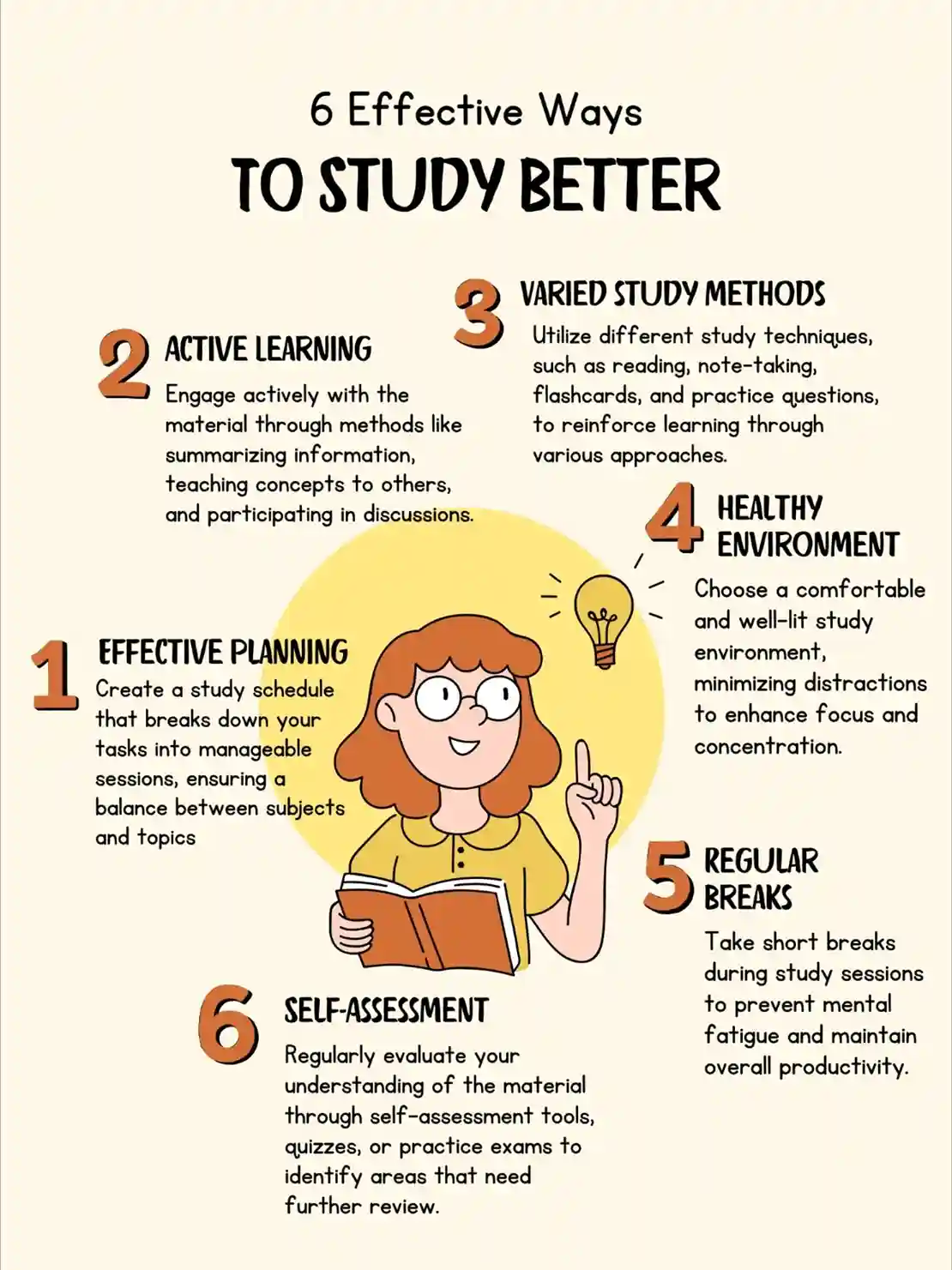
Instead of cramming everything in one session, review your study material over time.
Spaced repetition helps strengthen memory by revisiting information at increasing intervals. This prevents the natural decline of memory and improves long-term retention.
Tip: Review your notes after class, then again after a few days, and once more before exams.
2. Practice Active Recall
Reading notes repeatedly isn’t enough—you need to actively test your memory.
Active recall involves trying to remember information without looking at your notes. This strengthens your brain’s ability to retrieve knowledge.
Tip: Use flashcards or quiz yourself regularly instead of just rereading.
3. Teach What You Learn
Explaining a concept to someone else forces you to truly understand it.
When you teach, you simplify ideas, identify gaps in your knowledge, and reinforce learning.
Tip: Try explaining lessons out loud in simple terms, even if no one is listening.
4. Focus on Problem Areas
Don’t just review what you already know—target what you don’t understand.
By identifying weak areas and turning them into questions, you actively engage with the material and build deeper comprehension.
Tip: Ask yourself: “What don’t I understand yet?” and work on that first.
5. Study on Paper for Better Focus

Studying on paper can improve concentration and memory compared to screens.
Writing notes by hand, highlighting key points, and annotating pages help reinforce learning and reduce distractions.
6. Use Short, Focused Study Sessions
Long study sessions can reduce your ability to retain information.
Instead, break your study time into shorter intervals using techniques like:
- Study for 25–30 minutes
- Take a 5-minute break
This keeps your brain fresh and improves focus.
Conclusion
Remembering what you study doesn’t require more time—it requires better strategies. By using techniques like spaced repetition, active recall, and focused study sessions, you can improve both understanding and memory.
Start applying these methods consistently, and you’ll notice a significant improvement in how much you retain and how confidently you perform in exams.
Another important factor in remembering what you study is consistency. Studying a little every day is far more effective than long, irregular sessions. When you build a regular study habit, your brain becomes familiar with processing and storing information more efficiently. Even 20–30 minutes of focused review each day can significantly improve long-term retention compared to last-minute cramming.
Additionally, your study environment and mindset play a crucial role in memory. A quiet, organized space helps reduce distractions, while a positive and curious attitude makes learning more engaging. Try to eliminate interruptions, set clear goals for each session, and approach your study time with intention. When your mind is focused and your environment supports you, remembering what you learn becomes much easier and more natural.
Finally, don’t underestimate the power of reviewing and reflecting on what you’ve learned. At the end of each study session, take a few minutes to summarize key points in your own words. This simple habit reinforces your understanding and helps transfer information from short-term to long-term memory. You can also write down quick notes or create mind maps to connect ideas more clearly.
In the end, improving your memory is a gradual process that requires patience and the right approach. By combining effective techniques, staying consistent, and creating a supportive study environment, you can turn learning into a more efficient and enjoyable experience. The more you practice these strategies, the easier it becomes to remember what you study and apply it with confidence.
Leave a Reply