You’ve created a vision board. You’ve set clear intentions. You feel motivated and ready to change. But somehow, a few days—or weeks—later, your new habit fades away.
Sound familiar?
The truth is, building habits isn’t just about motivation or good intentions. It’s about preparation, strategy, and self-awareness. In this SEO-optimized guide, you’ll discover why habits don’t stick—and more importantly, what you can do to make them last.
Why Most Habits Fail
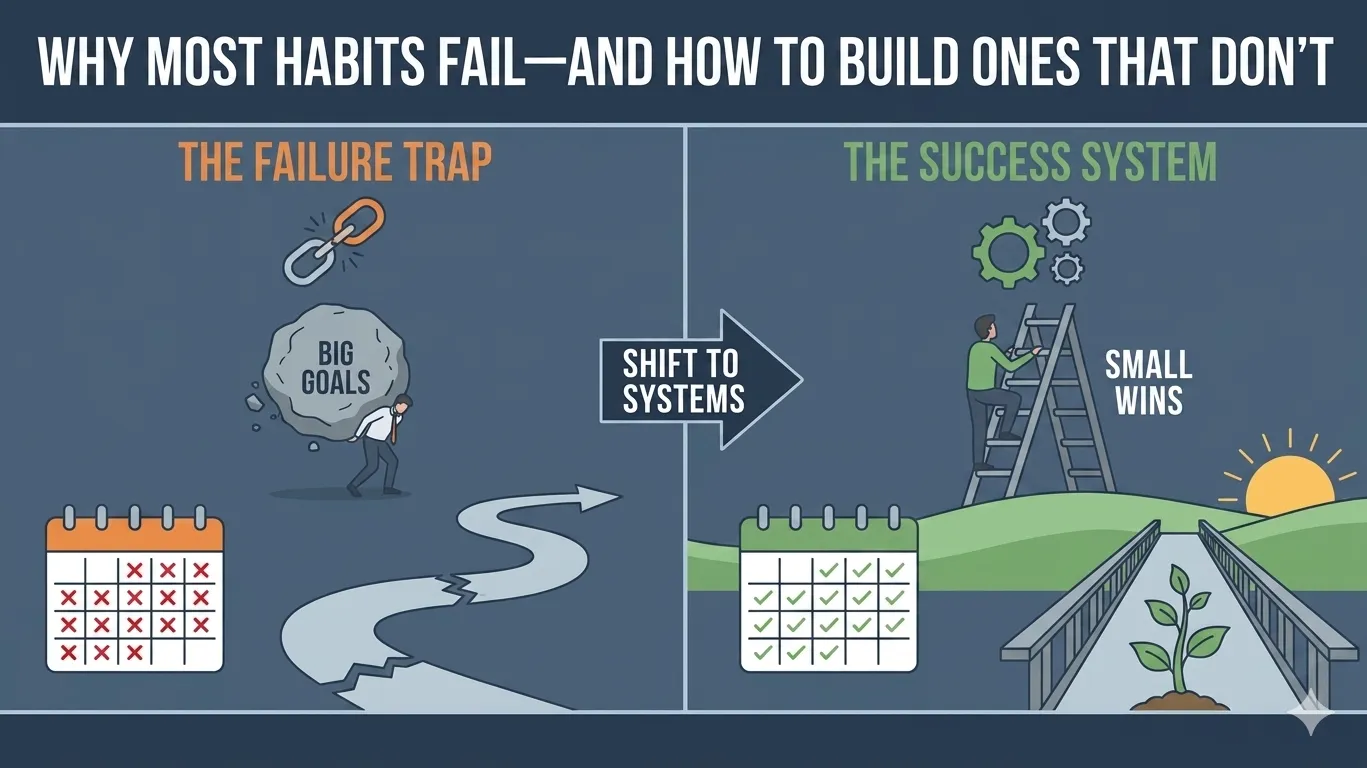
Many people believe they lack discipline. But in reality, habits often fail because they aren’t set up properly from the start.
For example, you might want to journal daily—but without a clear routine or trigger, it becomes easy to forget or skip. The difference between success and failure often comes down to how well you prepare your habit to fit into your life.
1. You Didn’t Prepare for Real Life
There’s a big difference between planning and preparing.
Planning assumes everything will go perfectly. Preparing means you’re ready to adapt when things don’t.
If you don’t think about when, where, and how your habit will happen, it’s unlikely to stick.
What to do instead:
- Identify a specific time and place for your habit
- Anticipate obstacles and plan alternatives
- Make your habit easy to adjust when life gets busy
2. You’re Too Hard on Yourself
When you miss a day, what do you say to yourself?
If your inner voice is critical—“I failed again” or “I have no discipline”—you’re more likely to quit altogether.
Self-judgment creates pressure, while self-compassion builds consistency.
What to do instead:
- Accept that mistakes are part of the process
- Replace criticism with encouragement
- Treat yourself like you would a friend learning something new
3. You’re Moving Too Fast
Motivation can trick you into setting unrealistic goals.
You start strong—but when motivation drops (and it always does), the habit feels too difficult to maintain.
What to do instead:
- Start small and simple
- Focus on consistency over intensity
- Build momentum gradually
Remember: Small habits done daily beat big habits done occasionally.
4. You Forgot Your “Why”
When motivation fades, your purpose keeps you going.
If you lose sight of why you started, your habit becomes just another task—and it’s easy to abandon.
What to do instead:
- Clearly define your reason for the habit
- Write it down and keep it visible
- Reconnect with it when you feel off track
Your “why” gives your habit meaning—and meaning creates motivation.
5. You Don’t Have a Clear Trigger
Habits don’t happen randomly—they’re triggered by cues.
Without a clear cue, your brain doesn’t know when to act.
What to do instead:
Use this simple formula:
“When [this happens], I will [do this habit].”
Examples:
- When I make my morning coffee, I will journal
- When I finish dinner, I will go for a walk
This technique uses behavioral science to make habits automatic.
6. You’re Too Rigid
Many people quit because they believe they must follow their habit perfectly.
But life isn’t perfect—and your habits shouldn’t be either.
Flexibility is key to long-term success.
What to do instead:
- Adapt your habit when needed
- Accept imperfect progress
- Experiment and adjust until it works for you
Think of it like testing a recipe—if it doesn’t work the first time, tweak it.
7. You Made It Too Complicated
Complex habits require more effort—and more effort means more resistance.
The more steps involved, the easier it is to give up.
What to do instead:
- Simplify your habit as much as possible
- Remove unnecessary steps
- Focus on the smallest version of the action
Make it so easy that skipping it feels harder than doing it.
Final Thoughts
If your habits aren’t sticking, it’s not because you lack discipline—it’s because your system needs adjusting.
To build habits that last:
- Prepare instead of just planning
- Start small and stay consistent
- Be kind to yourself
- Stay connected to your “why”
- Keep your approach flexible
Real change doesn’t come from perfection—it comes from persistence.
Leave a Reply