Did you know that millions of tonnes of food are wasted every year? In countries like Australia alone, food waste has reached alarming levels-contributing significantly to climate change, greenhouse gas emissions, and environmental damage.
The way we produce, consume, and dispose of food has a direct impact on the planet. The good news? Your daily food choices can make a difference. Even small, mindful changes-when adopted collectively-can help protect the Earth and promote a more sustainable future.
Table of Contents
ToggleWhy Sustainable Eating Matters
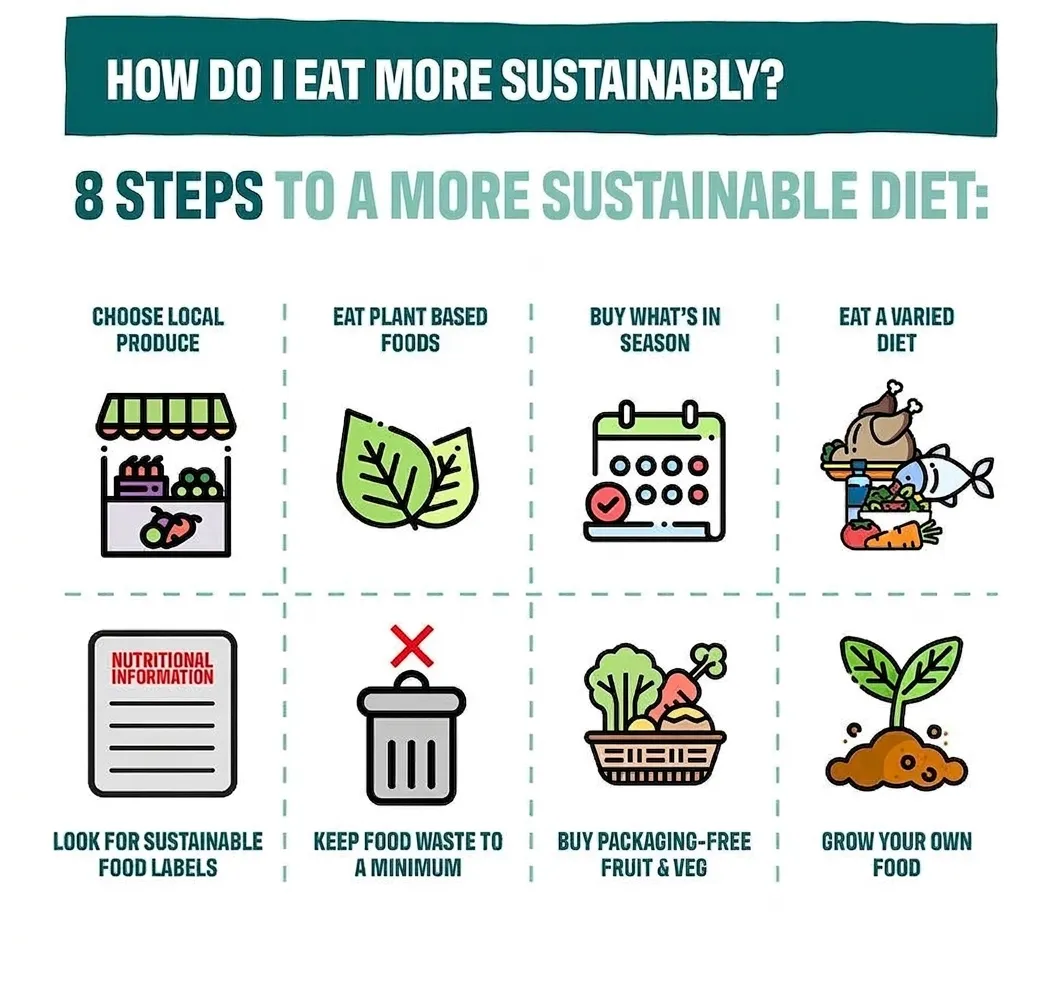
Modern food systems are a major contributor to environmental issues such as:
- Land degradation
- Greenhouse gas emissions
- Water pollution
- Climate change
At the same time, many of the least sustainable foods-like ultra-processed products-are also harmful to our health.
This means that eating sustainably doesn’t just help the planet-it also supports your overall well-being.
Eat Seasonal and Local Produce
One of the simplest ways to adopt sustainable eating is by choosing seasonal foods.
Benefits of seasonal eating:
✔️ Better nutrition
Seasonal produce is harvested at the right time, allowing it to fully develop nutrients and flavor.
✔️ More affordable
Local, in-season foods are easier to source, reducing costs associated with transportation and storage.
✔️ Lower environmental impact
Seasonal foods require less:
- Transportation
- Refrigeration
- Packaging
This reduces energy use and greenhouse gas emissions significantly.
Minimize Food Waste
Food waste is one of the biggest environmental challenges today. When food ends up in landfills, it produces methane, a powerful greenhouse gas.
Why reducing food waste matters:
- Saves natural resources (water, energy, fuel)
- Reduces landfill emissions
- Helps you save money
Simple ways to reduce food waste:
- Store food properly to extend freshness
- Use leftovers creatively (soups, stews, smoothies)
- Freeze overripe fruits for later use
- Make homemade vegetable stock from scraps
- Cook in batches and freeze meals
Small habits like these can have a big environmental impact over time.
Eat Less Meat (But Smarter)
Meat can be part of a healthy diet, but overconsumption has serious environmental consequences.
Environmental impact of meat production:
- Contributes significantly to greenhouse gas emissions
- Requires large amounts of water
- Impacts land use and biodiversity
Sustainable approach:
- Reduce portion sizes
- Have meat-free days
- Replace some meals with plant-based options
Even cutting back slightly can help reduce your carbon footprint.
Make Eco-Friendly Food Choices
Beyond what you eat, how you shop also matters.
Easy sustainable habits:
- Use reusable shopping bags
- Choose minimal or recyclable packaging
- Support local farmers and markets
- Avoid overbuying
👉 Conscious consumption helps reduce waste and supports sustainable food systems.
Sustainable Eating = Healthy Living
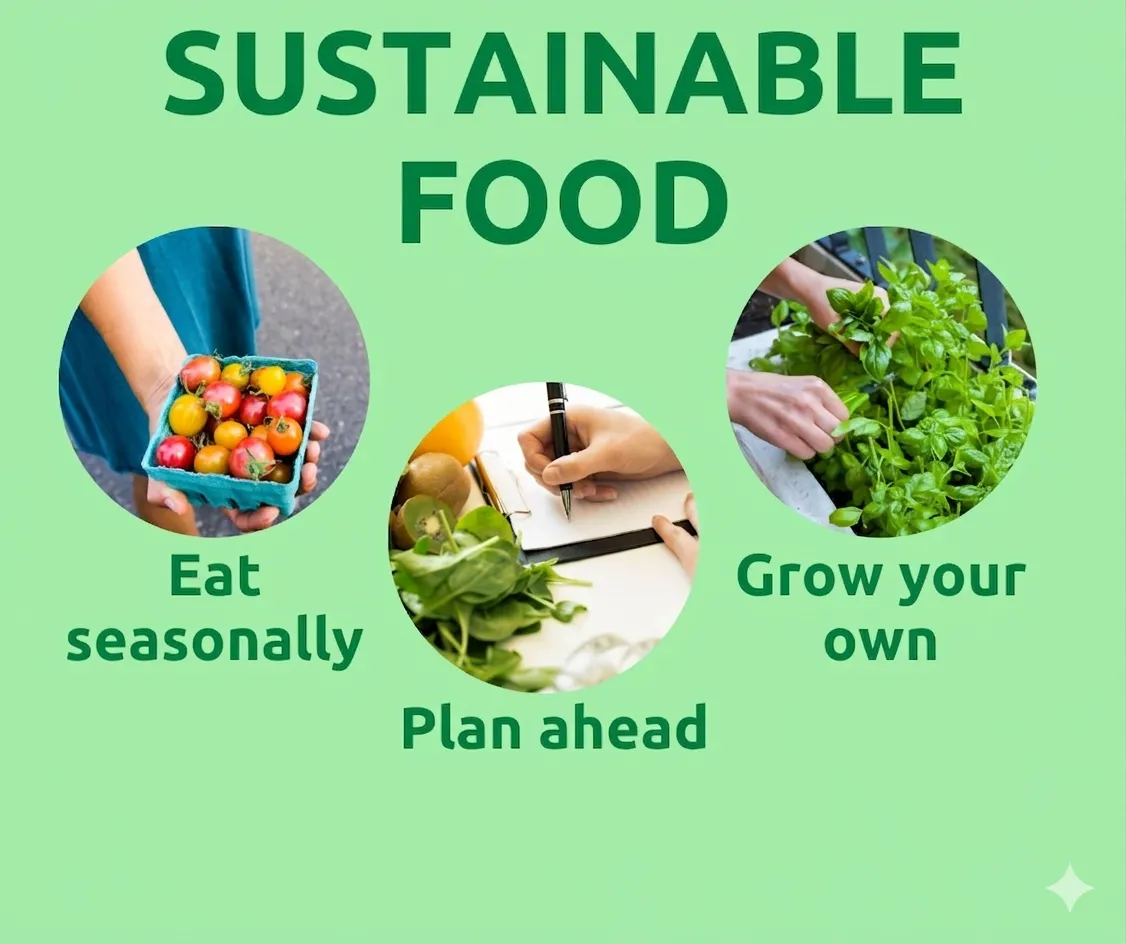
Sustainable eating is not about strict rules-it’s about making better choices consistently.
Benefits include:
- Improved personal health
- Reduced environmental impact
- Long-term cost savings
- Support for local communities
When you align your diet with sustainability, you create a lifestyle that benefits both you and the planet.
Final Thoughts: Small Changes, Big Impact
It’s easy to think that individual actions don’t matter-but they do. When millions of people make small changes, the collective impact is powerful.
By:
- Eating seasonal foods
- Reducing food waste
- Consuming less meat
- Making mindful shopping choices
…you contribute to a healthier, more sustainable world.
👉 Remember: every meal is an opportunity to make a difference.
Start your sustainable eating journey today-because protecting the Earth begins on your plate.
Support Sustainable Farming and Local Communities
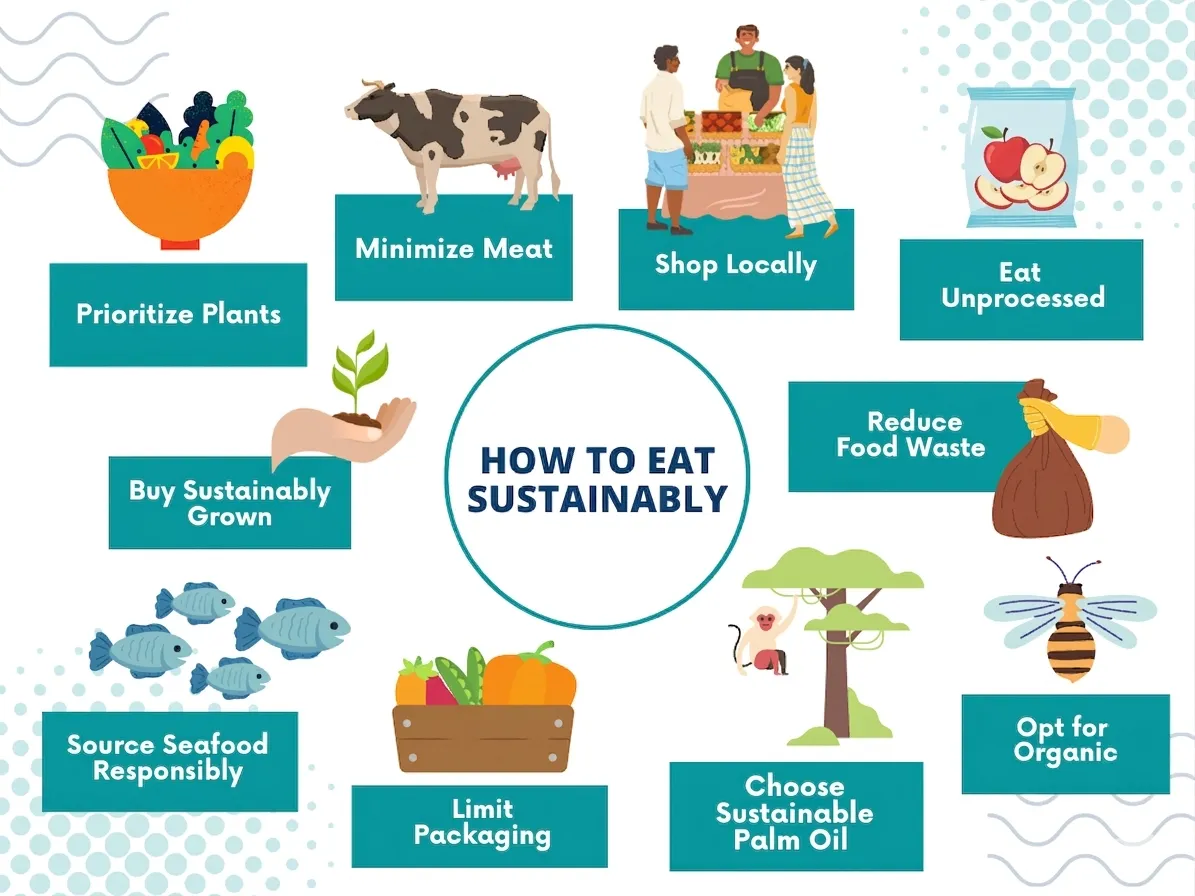
Choosing sustainably sourced foods is not only good for the environment but also supports local farmers and communities. When you buy from local markets or choose products with sustainable certifications, you help promote ethical farming practices that protect soil health, biodiversity, and water resources. Supporting these systems encourages a more resilient food supply chain and reduces dependence on large-scale industrial agriculture, which often has a heavier environmental footprint.
Build Long-Term Sustainable Eating Habits
Sustainable eating is most effective when it becomes a long-term habit rather than a short-term effort. Start with small, manageable changes—such as adding one plant-based meal per week or planning your grocery list more carefully. Over time, these habits become second nature and lead to meaningful environmental impact. By being mindful of what you eat and how it’s sourced, you contribute to a healthier planet while also creating a balanced and conscious lifestyle.
Leave a Reply