Building muscle is more than just lifting weights or following a workout routine-it’s a complex biological process happening inside your body every time you train. Whether you’re a beginner or an experienced fitness enthusiast, understanding the science behind muscle growth can help you train smarter, recover better, and achieve long-term results.
In this guide, we break down the key principles of muscle building, from muscle anatomy to nutrition, recovery, and progressive overload.
Table of Contents
ToggleWhat Are Muscles Made Of?

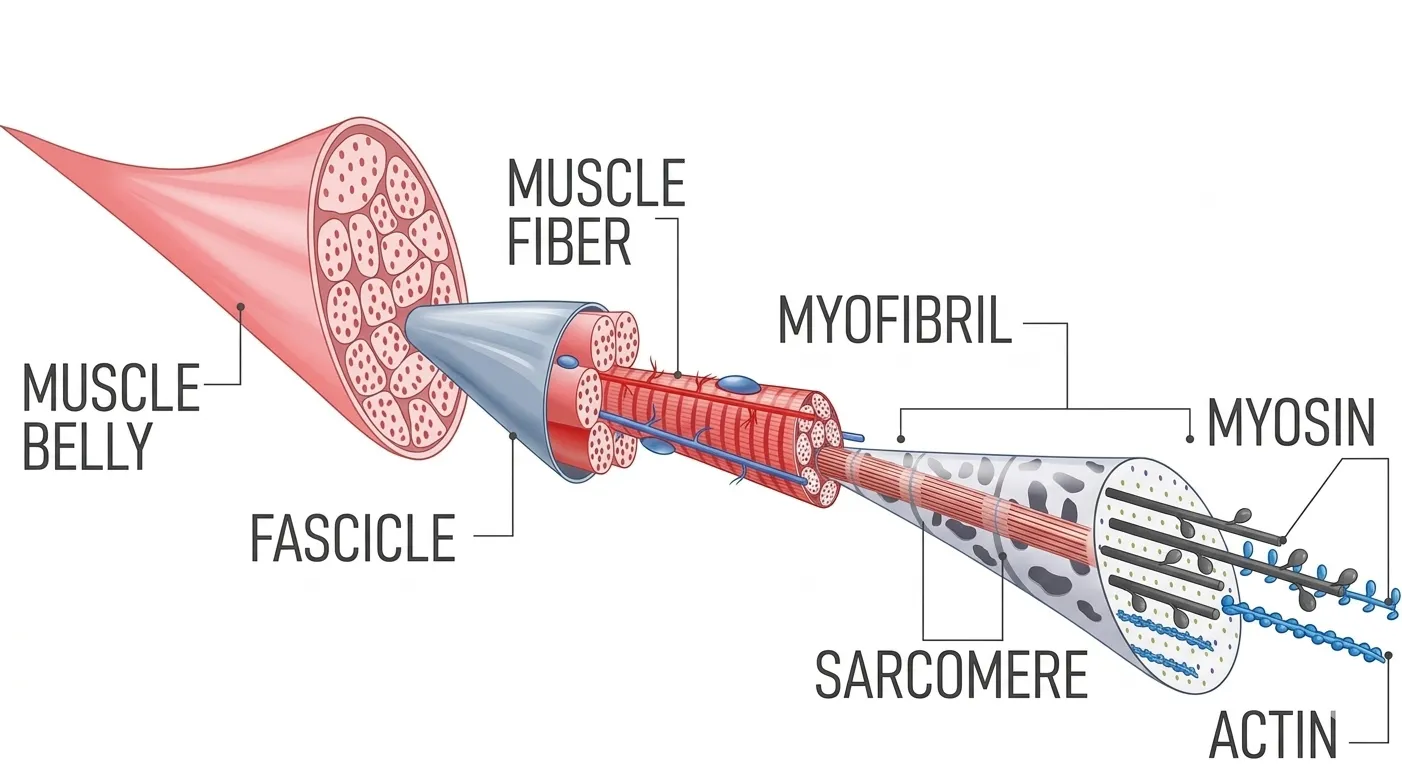
To understand how muscles grow, you first need to know how they are structured. Muscles are made up of bundles of fibers, and these fibers fall into two main categories:
- Type I (slow-twitch fibers): Designed for endurance activities like running or cycling. They resist fatigue but generate less force.
- Type II (fast-twitch fibers): Built for power and strength, used in activities like weightlifting and sprinting. These fibers produce more force but fatigue faster.
When you perform strength training or high-intensity workouts, your body primarily recruits fast-twitch fibers, which play a major role in muscle growth.
How Muscles Grow: The Science of Hypertrophy
Muscle growth, also known as hypertrophy, occurs when muscle fibers increase in size. This process is driven by three key mechanisms:
1. Mechanical Tension
When you lift weights or perform resistance exercises, your muscles experience tension. The heavier the load, the greater the tension placed on the fibers. This stimulates your body to adapt by building stronger, larger muscles.
2. Muscle Damage
Intense workouts-especially during the lowering (eccentric) phase-create tiny micro-tears in muscle fibers. Your body repairs these fibers by fusing them together, making them thicker and stronger over time.
3. Metabolic Stress
That burning sensation you feel during high-rep workouts? That’s metabolic stress. It occurs when byproducts like lactate build up in the muscles, signaling your body to promote growth and adaptation.
Together, these three factors create the ideal environment for muscle development.
Protein Synthesis vs. Breakdown
Muscle building is a constant balance between two processes:
- Protein synthesis: The creation of new muscle proteins after training
- Protein breakdown: The natural degradation of muscle tissue
To build muscle effectively, your body must be in a state where protein synthesis exceeds breakdown. This is why both training and nutrition are essential.
Consuming enough protein provides amino acids-the building blocks your body needs to repair and grow muscle tissue after workouts.
Why Rest and Recovery Matter
One of the biggest misconceptions in fitness is that muscles grow during workouts. In reality, muscle growth happens during recovery.
After training, your muscles need time-typically 24 to 48 hours-to repair and rebuild. Without adequate rest, your body cannot fully recover, which may lead to fatigue, stalled progress, or even injury.
Sleep is equally important. During deep sleep, your body releases growth hormone, which plays a key role in muscle repair and development. Poor sleep can significantly reduce your ability to build muscle.
Nutrition for Muscle Growth
Your diet is just as important as your training program. To build muscle effectively, focus on these key nutritional factors:
Protein Intake
Protein is essential for muscle repair and growth. A general guideline is around 1.2 grams of protein per kilogram of body weight per day, depending on your activity level.
Carbohydrates
Carbs provide energy for workouts and help replenish glycogen stores after exercise. Without enough carbohydrates, your performance and recovery may suffer.
Healthy Fats
Fats support hormone production, including testosterone, which is important for muscle growth. Choose sources like nuts, seeds, olive oil, and avocados.
Caloric Surplus
To gain muscle, you need to consume slightly more calories than you burn. A small caloric surplus provides the energy required for muscle growth without excessive fat gain.
Progressive Overload: The Key to Growth
If you want to keep building muscle, you must continuously challenge your body. This principle is known as progressive overload.
You can apply it by:
- Increasing the weight you lift
- Adding more repetitions or sets
- Improving exercise difficulty or technique
Without progressive overload, your muscles will adapt and stop growing. Consistent progression is essential for long-term strength and development.
The Role of Genetics
Genetics influence how quickly and easily you build muscle. Some individuals naturally have more fast-twitch fibers, giving them an advantage in strength and size gains. Others may excel in endurance activities.
While you can’t change your genetics, you can maximize your potential through:
- Smart training programs
- Proper nutrition
- Consistent recovery
Your results will depend more on your habits than your starting point.
Muscle Building Is a Long-Term Process
Building muscle doesn’t happen overnight. It requires consistency, patience, and a balanced approach to training, nutrition, and recovery.
By understanding the science behind muscle growth—mechanical tension, muscle damage, and metabolic stress—you can make more informed decisions in your fitness journey.
Remember, every workout you complete is part of a bigger process happening inside your body. With the right strategy, your muscles will continue to grow stronger, more resilient, and better adapted over time.
Final Tip: Stay consistent, listen to your body, and focus on progress—not perfection. That’s the real secret to building muscle effectively and sustainably.
Leave a Reply