Choosing the best time to exercise is one of the most common questions for anyone starting a fitness journey. Should you train in the morning to boost your energy, or in the evening to maximize performance? The truth is, there’s no one-size-fits-all answer. The ideal workout time depends on your lifestyle, body rhythm, and fitness goals.
In this guide, we’ll explore the pros and cons of morning vs evening workouts, what science says, and how to choose the best time for your routine.
Table of Contents
ToggleIs It Better to Work Out in the Morning or Evening?
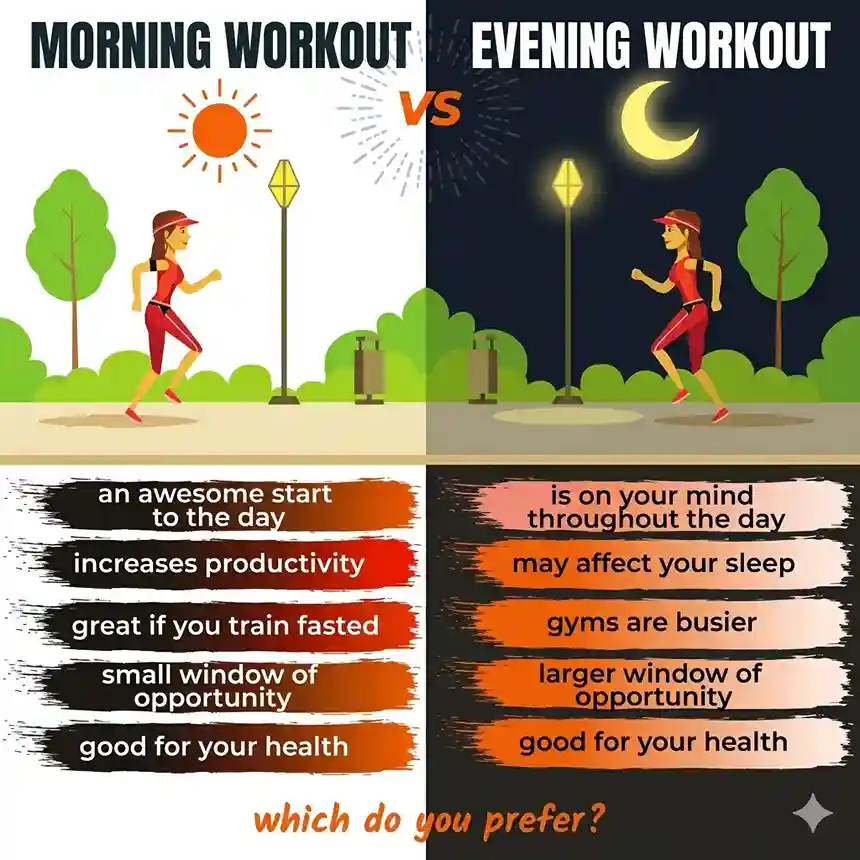
Both morning and evening workouts offer unique benefits. Your decision often comes down to your daily schedule, personal preferences, and how your body responds to exercise at different times of the day.
While some people feel energized early in the morning, others perform better later in the day. Understanding these differences can help you build a sustainable and effective fitness routine.
Benefits of Morning Workouts
Morning exercise is a popular choice for those who want to start their day strong. It offers several physical and mental benefits:
1. Boosts Metabolism and Energy
Working out in the morning kickstarts your metabolism, helping your body burn calories more efficiently throughout the day. It also provides a natural energy boost—similar to a cup of coffee.
2. Improves Mood and Focus
Exercise releases endorphins, which enhance mood and reduce stress. A morning workout can help you feel more focused and productive during the day.
3. Supports Better Sleep
Training early helps regulate your circadian rhythm, making it easier to fall asleep and improve overall sleep quality.
4. Builds Consistency
Morning workouts are less likely to be interrupted by work, social events, or unexpected responsibilities, making it easier to stay consistent.
Drawbacks of Morning Workouts
- Muscles may feel stiff after waking up
- Lower strength and endurance compared to later in the day
- Requires proper warm-up and hydration
Tip: If you train in the morning, consider a light carbohydrate snack 30–40 minutes before your workout to fuel your body.
Benefits of Evening Workouts
Evening workouts are ideal for those who feel more active later in the day or have busy mornings.
1. Strength and Performance
Your body temperature, flexibility, and strength tend to peak in the afternoon or evening. This can lead to better workout performance and improved results.
2. Stress Relief After a Long Day
Exercise is a great way to release stress and unwind after work or school, helping improve mental wellbeing.
3. Increased Endurance
Many people find they have more stamina and energy in the evening, making it easier to complete intense workouts.
Drawbacks of Evening Workouts
- Gyms are often more crowded
- Late workouts may interfere with sleep
- High-intensity exercise close to bedtime can increase alertness
Tip: Finish your workout at least 2 hours before bedtime to avoid sleep disruption.
What Does Science Say About Workout Timing?
Scientific research does not point to a single “best” time to exercise. Instead, it highlights the importance of your chronotype-your natural biological rhythm.
- Morning workouts may support fat burning and habit formation
- Evening workouts may enhance strength, flexibility, and endurance
- Afternoon sessions may reduce injury risk due to better muscle readiness
Ultimately, consistency matters more than timing. Training regularly-regardless of the hour-delivers the greatest health and fitness benefits.
How to Choose the Best Time to Work Out
The best workout time is the one you can stick to consistently. Here’s how to find your ideal schedule:
1. Consider Your Daily Routine
Choose a time that fits naturally into your lifestyle without causing stress or disruption.
2. Listen to Your Body
Pay attention to when you feel most energetic and motivated during the day.
3. Match Your Goals
- Fat loss & habit building → Morning workouts
- Strength & performance → Evening workouts
4. Experiment and Adjust
Try working out in the morning for one week, then switch to the evening the next week. Compare your energy, performance, and consistency.
Morning vs Evening Workouts: Quick Summary
- Morning workouts: Boost metabolism, improve mood, and support consistency-but may feel harder physically
- Evening workouts: Enhance strength and performance, reduce stress-but may affect sleep if done too late
- Science: No universal best time-your body rhythm and consistency matter most
Final Thoughts
So, when is the best time to exercise? The answer is simple: the time that works best for you.
Whether you prefer a refreshing morning jog or an intense evening gym session, what truly matters is staying consistent. By aligning your workouts with your lifestyle and listening to your body, you can build a routine that supports both your fitness goals and overall wellbeing.
Start where you feel strongest-and stick with it.
Leave a Reply