When it comes to fitness, most people focus on pushing harder, training longer, and chasing faster results. But here’s the truth: recovery is just as important as your workout. Without proper rest and recovery, your body cannot repair, rebuild, or perform at its best.
Whether you’re lifting weights, running, cycling, or doing HIIT, your muscles need time to recover. In this guide, we’ll explore why recovery matters, the different types of recovery, and how to build an effective recovery routine for long-term fitness success.
Table of Contents
ToggleWhy Recovery Is Essential for Fitness Progress

1. Muscle Repair and Growth
Every workout creates tiny tears in your muscle fibers, often called microtears. During recovery, your body repairs these fibers, making them stronger and more resilient. Without enough recovery time, this process is incomplete—leading to stalled progress and fatigue.
2. Restoring Energy Levels
Exercise uses up glycogen, your body’s main energy source. Recovery allows these energy stores to replenish, ensuring you have enough fuel for your next workout.
3. Mental Reset and Motivation
Recovery isn’t just physical—it’s mental too. Overtraining can lead to burnout, low motivation, and even stress. Taking time to rest helps refresh your mind and keeps you motivated in the long run.
4. Injury Prevention
Lack of recovery increases the risk of overuse injuries. Giving your body time to heal reduces strain on muscles and joints, helping you stay consistent and injury-free.
Types of Recovery You Should Include
Rest Days
Rest days are crucial for both physical and mental recovery. They allow your muscles to rebuild, your nervous system to reset, and your energy levels to restore.
Active Recovery
Active recovery involves low-intensity activities that keep your body moving without adding stress. Examples include:
- Walking
- Swimming
- Yoga
- Light cycling
These activities improve blood circulation and help reduce muscle stiffness.
Best Recovery Exercises to Add to Your Routine
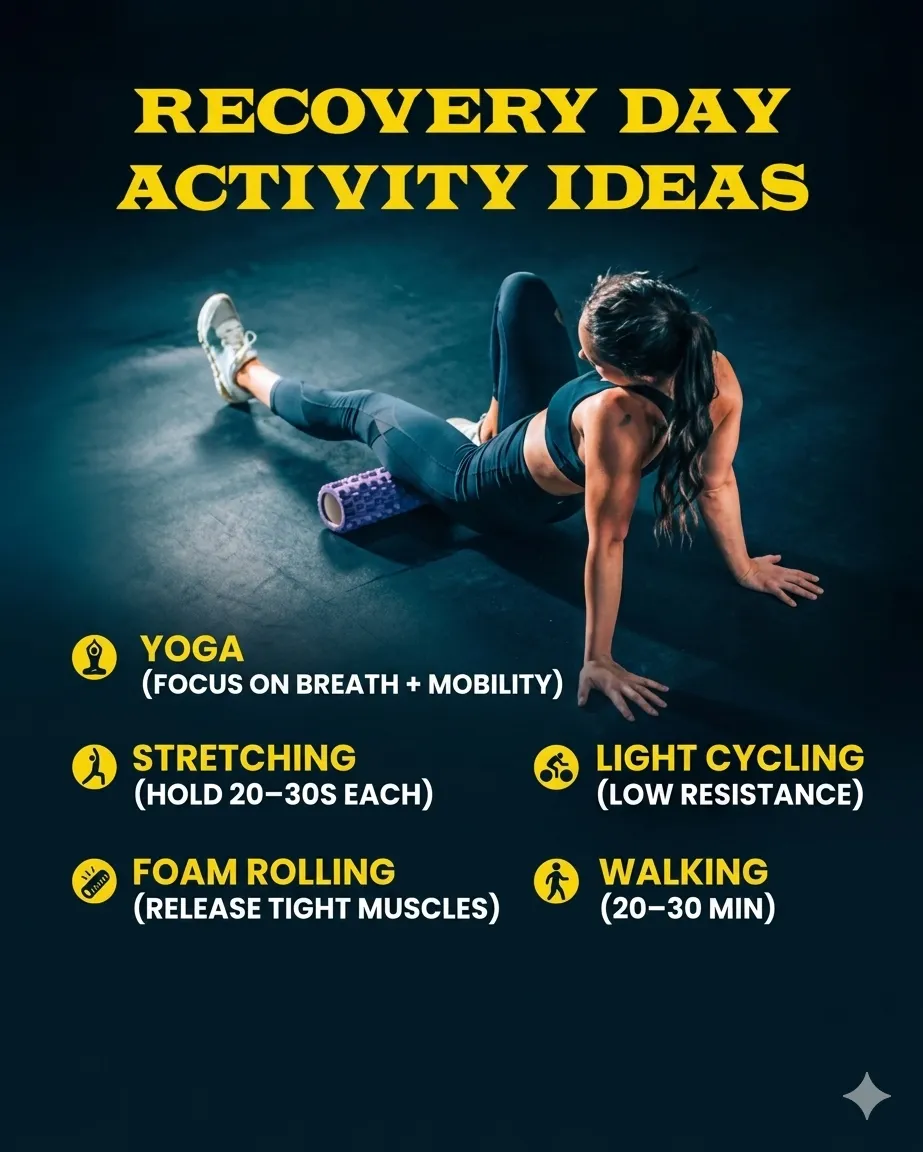
Incorporating light movements into your recovery days can speed up healing and improve flexibility:
- Gentle walking or light jogging
- Swimming or water-based exercises
- Stretching and yoga
- Mobility drills
- Foam rolling or self-massage
- Low-impact cardio (like cycling or elliptical)
These exercises promote circulation and help your muscles recover faster without overloading them.
How to Build Recovery Into Your Weekly Routine
1. Schedule Rest Days
Aim for 1–2 rest days per week, depending on your workout intensity. Alternating between rest and active recovery days can keep your routine balanced.
2. Listen to Your Body
Pay attention to signs like persistent soreness, fatigue, or declining performance. These signals often mean your body needs more recovery time.
3. Adjust After Intense Workouts
After heavy lifting or high-intensity sessions, give yourself extra recovery time to allow full muscle repair.
Key Factors That Improve Recovery
Sleep
Sleep is one of the most important parts of recovery. Aim for 7–9 hours of quality sleep per night. During sleep, your body releases growth hormone, which plays a key role in muscle repair and development.
Nutrition
Fuel your body properly to support recovery:
- Protein helps repair muscle tissue
- Carbohydrates restore energy levels
- Healthy fats support overall health
- Hydration keeps your muscles functioning efficiently
A balanced post-workout meal can significantly speed up recovery.
Signs of Overtraining You Shouldn’t Ignore
Without proper recovery, you risk overtraining. Watch for these warning signs:
- Constant muscle soreness
- Decreased performance
- Frequent illness
- Fatigue and low energy
- Mood swings or irritability
If you notice these symptoms, it’s time to scale back and prioritize rest.
DOMS vs Injury: Know the Difference
It’s normal to feel sore after a tough workout. This is called Delayed Onset Muscle Soreness (DOMS) and usually appears 24–48 hours after exercise.
However, sharp pain, swelling, or limited movement could indicate an injury. In that case, you should stop training and seek professional advice.
Final Thoughts: Recovery Is Part of the Process
Recovery is not a break from progress—it’s a critical part of it. By balancing training with proper rest, you can:
- Build strength more effectively
- Reduce injury risk
- Stay consistent
- Improve overall performance
Instead of pushing your body to the limit every day, focus on a smarter approach. Train hard, recover well, and you’ll unlock your full fitness potential over time.
Leave a Reply