Many people today struggle with a simple question:
“If I refuse to eat certain foods, is that healthy—or is it disordered?”
In a world filled with endless nutrition advice, diet trends, and social media pressure, it’s easy to lose touch with what your body actually needs. This is where understanding the difference between food rules and food preferences becomes essential.
What Are Food Rules?
Food rules are strict, self-imposed guidelines that control:
- What you can or cannot eat
- When you are allowed to eat
- How much you should eat
Common examples of food rules:
- “I never eat sugar or carbs.”
- “I can only eat at certain times of the day.”
- “I must count calories for every meal.”
At first glance, these rules may seem like discipline or healthy habits. However, they often lead to restriction, stress, and an unhealthy relationship with food.
Why Food Rules Can Be Harmful
1. They Ignore Your Body’s Signals
Your body naturally tells you when it’s hungry or full. Food rules often override these signals, forcing you to eat based on logic instead of need.
This can lead to:
- Intense cravings
- Obsessive thoughts about food
- Episodes of overeating
Even mental restriction (telling yourself “I can’t have that”) can trigger the same effects as physical restriction.
2. They Create Guilt and Shame
Food rules often turn eating into a moral issue:
- Eating salad = “being good”
- Eating dessert = “being bad”
Over time, this mindset can damage your self-esteem. Breaking a food rule may feel like a personal failure, not just a simple choice.
What Are Food Preferences?
Unlike rules, food preferences are flexible and natural. They reflect:
- Your taste
- Your culture
- Your body’s needs
Examples of food preferences:
- Disliking certain flavors or textures
- Choosing lighter meals in the evening
- Avoiding foods that don’t make you feel good
Preferences are guiding tools, not restrictions.
Food Rules vs. Preferences: How to Tell the Difference
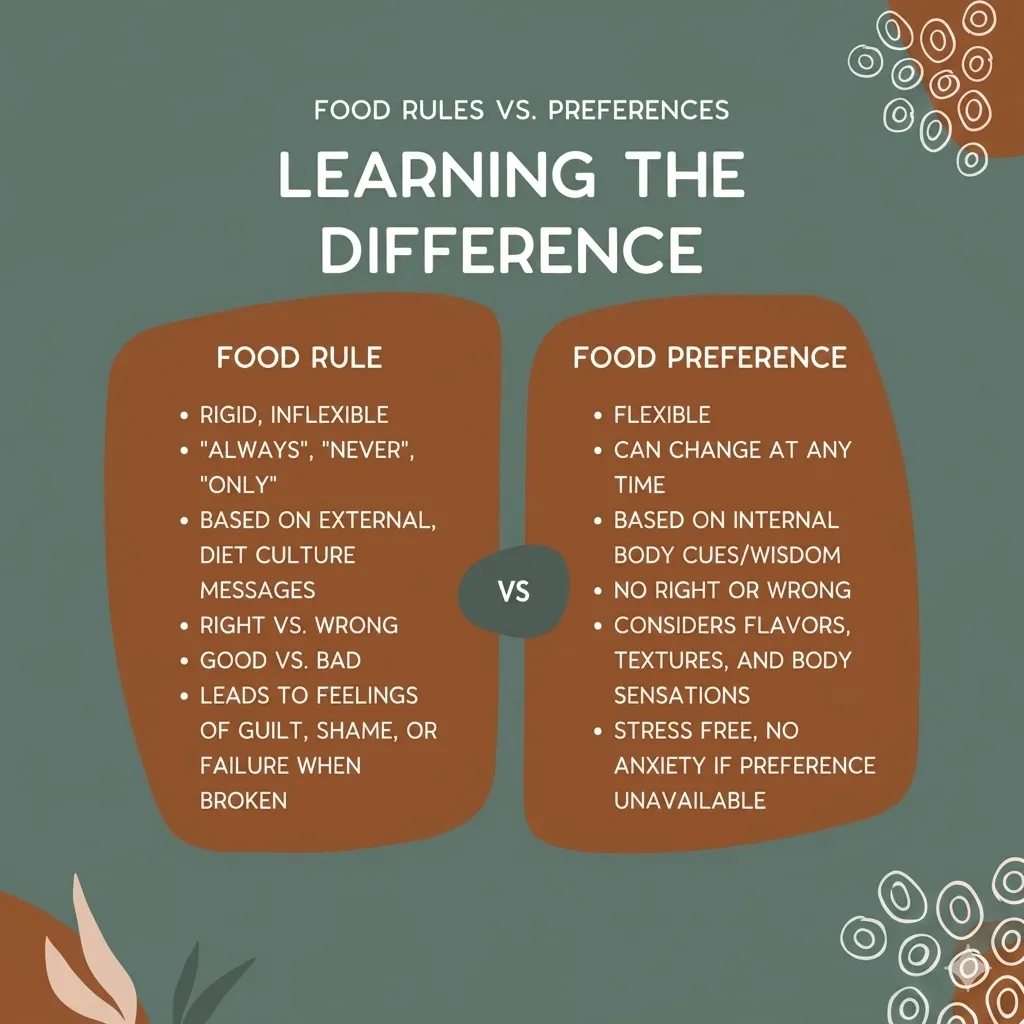
The key difference lies in your emotional response.
It’s likely a food rule if:
- You feel guilt, anxiety, or shame when breaking it
- You feel “out of control” around restricted foods
- Your eating feels rigid and stressful
It’s likely a preference if:
- You can eat the food without emotional distress
- You simply don’t enjoy or want it
- Your choices feel flexible and natural
Example:
- “I can’t eat dessert” → Food rule
- “I don’t really like dessert” → Food preference
Why Preferences Support Better Health
Your body is smarter than you think. It often signals what it needs:
- Craving iron-rich foods when deficient
- Avoiding foods that cause discomfort
- Naturally preferring certain textures or flavors
Listening to your preferences helps you:
- Eat more intuitively
- Reduce stress around food
- Build a sustainable, healthy lifestyle
This approach aligns with intuitive eating, which focuses on trusting your body instead of controlling it.
How to Move Away from Food Rules
If you recognize food rules in your life, the next step is to challenge them.
✔️ Simple steps to start:
- Question rigid beliefs about “good” and “bad” foods
- Allow yourself to eat previously restricted foods
- Notice your emotions when you break a rule
- Practice flexibility instead of perfection
Breaking food rules may feel uncomfortable at first—but over time, it reduces anxiety and restores balance.
Final Thoughts
Understanding the difference between food rules and food preferences can transform your relationship with food.
- Food rules restrict and create stress
- Food preferences guide and support your wellbeing
You don’t need more control to be healthy—you need more awareness and self-trust.
At the end of the day, eating well isn’t about perfection. It’s about listening to your body, respecting your needs, and enjoying food without guilt.
Leave a Reply