Improving yourself every day can feel exciting and motivating for some, while overwhelming and daunting for others. Self-improvement is a personal journey that requires consistency, patience, and the willingness to step outside your comfort zone. Whether you feel stuck in a rut or simply want to enhance your life, taking small, intentional steps can help you become the best version of yourself.
Here’s a practical guide with 20 ways to improve yourself every day, backed by research and actionable tips.
Why Self-Improvement Matters

Personal growth is not always linear. Every small step, whether it’s adopting a new habit or challenging yourself, contributes to your development. As James Clear emphasizes in Atomic Habits, improving yourself by just 1% each day can create meaningful, lasting change over time.
With consistent effort, you can enhance your mental health, relationships, career, and overall quality of life.
20 Practical Ways to Improve Yourself Every Day
1. Make Time for Rest
Being constantly exhausted prevents growth. Prioritize mental, physical, and social rest to recharge. According to UW Medicine, rest improves attention, focus, and creativity, giving you more energy for self-improvement.
2. Read More Books
Reading expands your perspective, develops empathy, and helps you learn new skills. If books aren’t your thing, try podcasts or self-help videos to gain insights into personal development.
3. Start a Gratitude Practice
Practicing gratitude-even 15 minutes a day-can improve mental wellness. Write down daily moments you appreciate, from small joys to meaningful experiences.
4. Learn a New Language
Learning another language enhances brain function, opens career opportunities, and helps you see the world from a fresh perspective. Immersing yourself in another culture broadens your mindset.
5. Meditate Daily
Even a few minutes of meditation can reduce stress, anxiety, and depression. Meditation increases self-awareness, helping you recognize habits that may hinder your growth.
6. Start Journaling
Journaling supports mental health and personal growth. Record your thoughts, goals, or gratitude. Consistent journaling can increase resilience and self-reflection.
7. Eat Healthy Foods
Nutrition fuels your mind and body. Focus on whole, colorful foods to maintain energy and mental clarity throughout the day.
8. Stay Hydrated
Proper hydration reduces anxiety and depression risks, while boosting energy and motivation. Carry a water bottle and aim for 6–8 glasses daily.
9. Add Movement to Your Life
Regular physical activity enhances well-being, sleep, and focus. Even small steps, like walking 10 minutes a day or stretching hourly, can make a difference.
10. Practice Kindness
Acts of kindness improve both your mood and others’ lives. Perform a daily act of kindness, whether helping a colleague or offering a smile to a stranger.
11. Spend More Time Outdoors
Exposure to nature reduces anxiety, fatigue, and depression. Even 15 minutes outside, surrounded by greenery, can improve your mental health.
12. Develop a List of Goals
Writing SMART goals helps track progress and hold yourself accountable. Whether it’s reading a book each month or walking daily, clearly defined goals drive personal growth.
13. Overcome Fear of Failure
Fear can prevent progress. Focus on potential success rather than just risks. Learn from mistakes, and use failures as stepping stones toward improvement.
14. Limit Activities That Drain You
Identify energy-draining habits, like excessive social media use, and reduce them. Replace them with activities that add value to your life.
15. Identify Energizing Activities
Recognize what fulfills you, whether it’s hobbies, social connections, or creative projects. Increase these activities to maintain high energy and motivation.
16. Practice Saying No
Assert your boundaries to prioritize your goals. Saying no to unnecessary obligations frees up time for personal growth and self-care.
17. Do Inner Work
Inner Work® focuses on self-awareness, values, and decision-making. Reflecting on your mental models helps you make intentional choices for personal development.
18. Become a Volunteer
Volunteering fosters empathy, purpose, and social connections. It also develops skills and enhances personal growth while benefiting others.
19. Nurture Relationships
Healthy relationships are essential for well-being. Schedule quality time, communicate effectively, and seek meaningful connections to grow as a person.
20. Work with a Coach
Professional coaching can accelerate your self-improvement journey. Coaches provide accountability, personalized strategies, and actionable feedback to help you thrive.
Benefits of Daily Self-Improvement
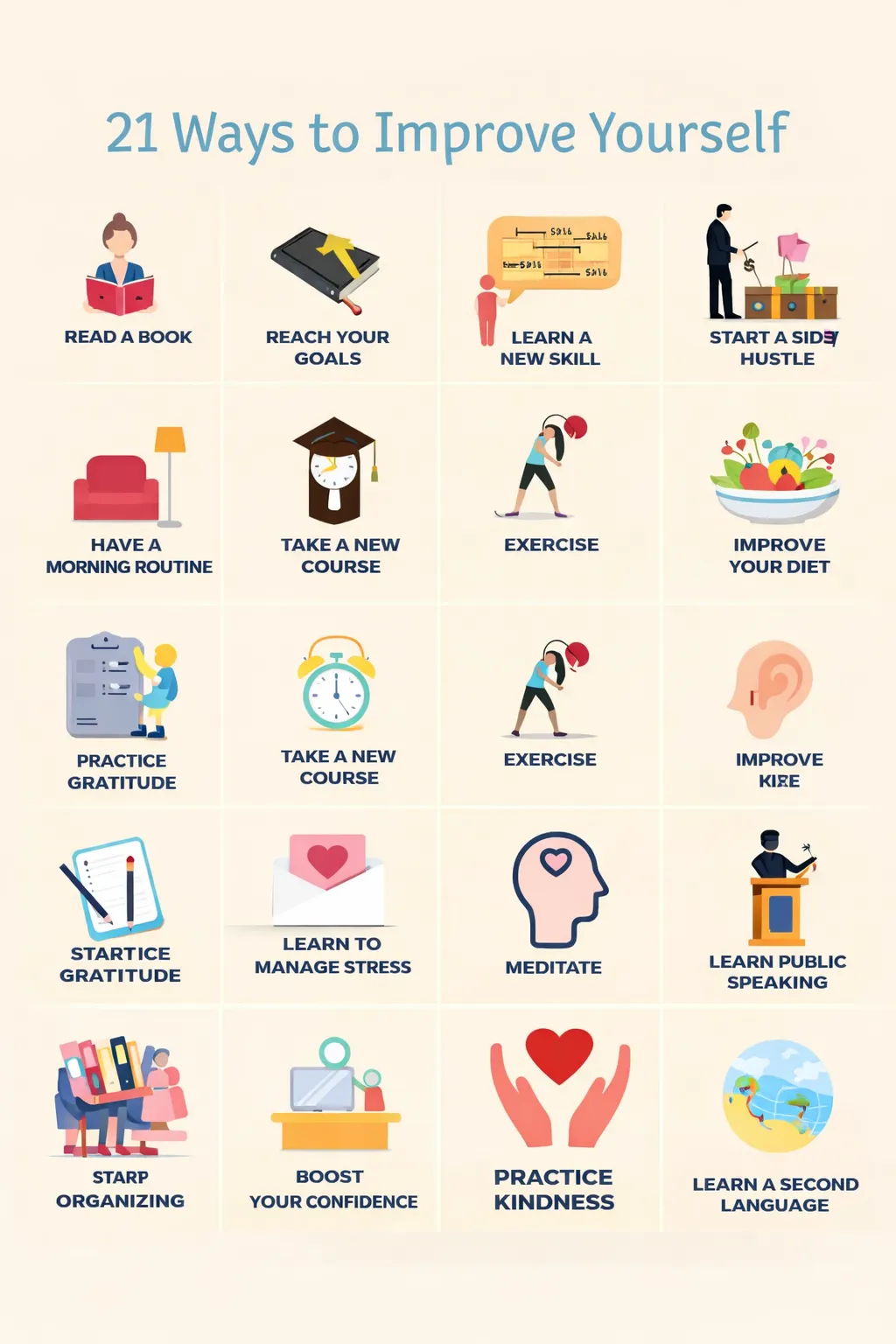
Consistent self-improvement positively impacts mental health, relationships, and career opportunities. Key benefits include:
- Increased adaptability: Confidence in managing life changes
- Better mental health: Higher self-esteem, lower anxiety and depression
- Career growth: New skills, promotions, and job opportunities
- Improved confidence: Stepping out of your comfort zone with courage
- Greater sense of purpose: Enhanced self-awareness and life meaning
By focusing on one small step each day, you gradually build a life of fulfillment, resilience, and personal growth.
Conclusion
Learning how to improve yourself every day is a transformative journey. Small, intentional habits-resting, journaling, moving, nurturing relationships, or working with a coach-compound into meaningful personal development.
Start today, take consistent action, and watch yourself become a better, stronger, and more fulfilled version of you.
Leave a Reply