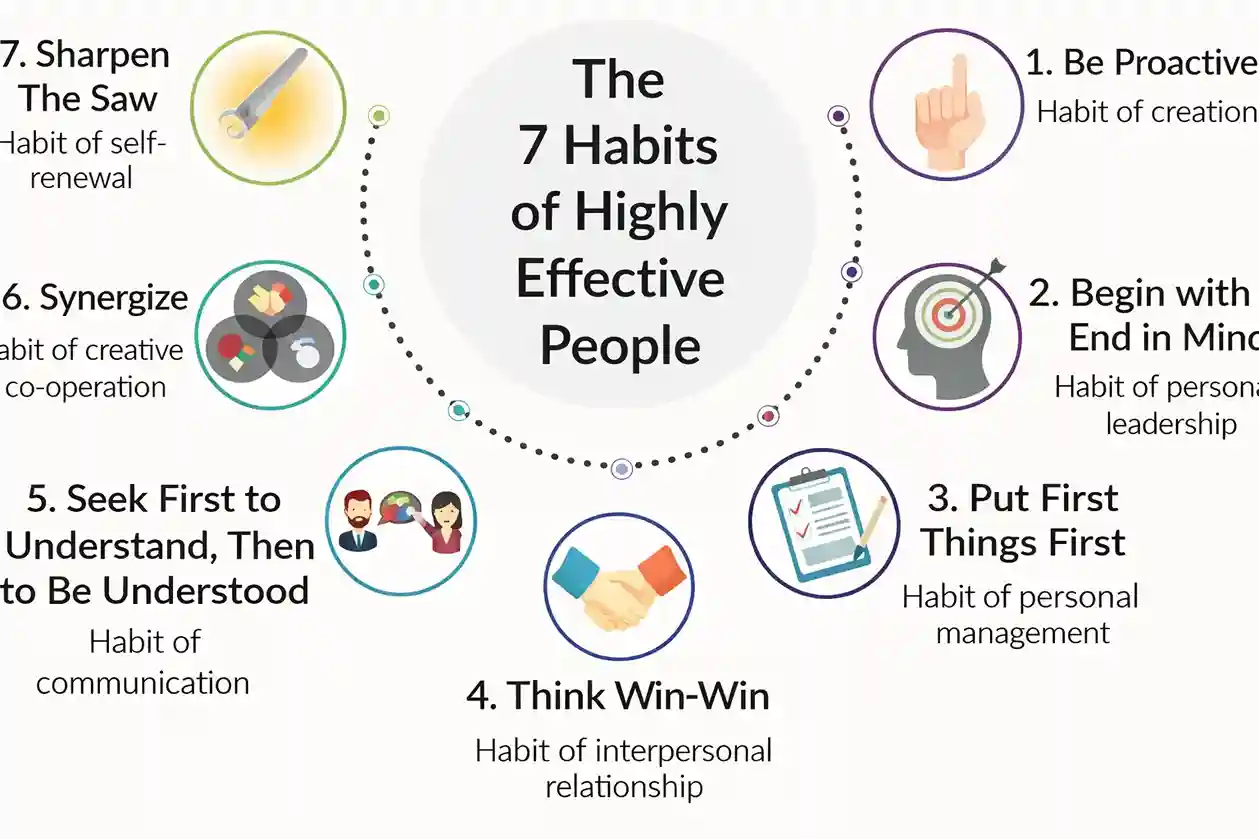
The 7 Habits of Highly Effective People is more than a bestselling self-help book—it’s a practical framework for building a life rooted in purpose, discipline, and meaningful results. First introduced by Stephen Covey in 1989, these habits guide individuals through a powerful progression: from personal responsibility to effective collaboration, and finally to long-term renewal.
Despite selling over 40 million copies worldwide, many readers struggle to apply its lessons consistently. The missing link isn’t knowledge—it’s daily practice. This guide shows you how to turn Covey’s principles into actionable habits you can implement every day.
Why the 7 Habits Still Matter Today
Covey’s core idea is simple but often overlooked:
lasting success comes from character, not quick techniques.
He contrasts two approaches:
- Personality ethic: focusing on image, skills, and tactics
- Character ethic: focusing on integrity, values, and internal growth
While personality may deliver short-term gains, character creates sustainable effectiveness.
The Structure of the 7 Habits
The habits are organized into three stages:
1. Private Victory (Habits 1–3)
Focus on self-mastery and independence:
- Take responsibility
- Define your direction
- Prioritize what matters
2. Public Victory (Habits 4–6)
Improve relationships and collaboration:
- Seek mutual benefit
- Communicate effectively
- Work together creatively
3. Renewal (Habit 7)
Maintain and strengthen your ability to practice all other habits.
This progression is called the “maturity continuum”—and the order matters. You can’t build strong relationships without first mastering yourself.
The Inside-Out Principle
One of Covey’s most powerful ideas is the inside-out approach:
Change starts with you—not your circumstances or other people.
- Want a better team? Improve your leadership first.
- Want stronger relationships? Become a better partner.
Real transformation always begins internally.
Turning the 7 Habits into Daily Actions
Reading about habits won’t change your life—practicing them will. Here’s how to integrate them into your daily routine:
Morning: Set Direction
Start your day with intention instead of reacting to distractions.
- Habit 2: Begin with the End in Mind
Review your goals and long-term vision. - Habit 3: Put First Things First
Identify your most important task for the day.
Even 10 minutes each morning can dramatically improve focus.
During the Day: Take Action
Apply the habits in real-time situations:
- Habit 1: Be Proactive
Pause before reacting—choose your response. - Habit 4: Think Win-Win
Look for solutions that benefit everyone. - Habit 5: Seek First to Understand
Listen deeply before responding. - Habit 6: Synergize
Collaborate and value different perspectives.
Evening: Renew Yourself
Most people skip this step—but it’s critical.
- Habit 7: Sharpen the Saw
Invest in:- Physical health (exercise, sleep)
- Mental growth (reading, learning)
- Emotional connection (relationships)
- Purpose (reflection, mindfulness)
Treat renewal as a scheduled priority, not an optional activity.
How to Actually Build These Habits
Many people fail because they try to adopt all 7 habits at once. Instead, follow proven behavior science principles:
1. Start Small
Begin with a version so easy you can’t fail.
Example: 5-minute morning planning instead of 45 minutes.
2. Use Habit Stacking
Attach a new habit to an existing one:
“After I make coffee, I review my goals.”
3. Make It Obvious and Easy
Clear triggers and simple actions increase consistency.
4. Track Your Progress
What gets measured gets improved. Track completion daily.
The 7 Habits: Practical Breakdown
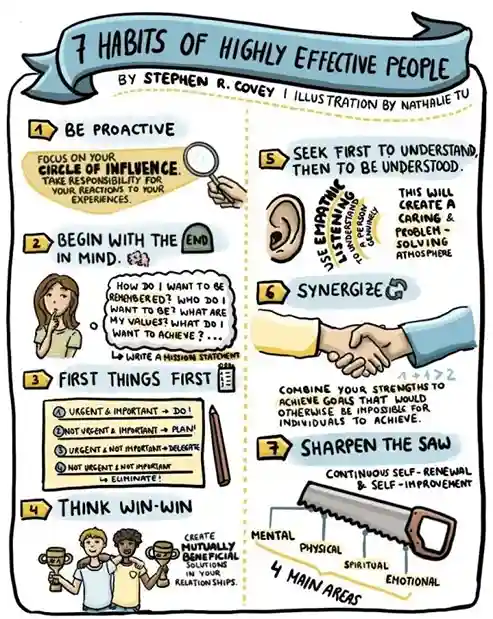
Habit 1: Be Proactive
Take responsibility for your actions and decisions.
Focus on what you can control—not external circumstances.
Habit 2: Begin with the End in Mind
Define your life vision and goals.
Without clarity, you risk being busy but directionless.
Habit 3: Put First Things First
Focus on important, not just urgent tasks.
Spend more time on planning, growth, and relationships.
Habit 4: Think Win-Win
Seek solutions where everyone benefits.
Avoid zero-sum thinking.
Habit 5: Seek First to Understand
Practice empathetic listening.
Understand others before expressing your view.
Habit 6: Synergize
Leverage teamwork and diversity.
Great ideas often come from collaboration.
Habit 7: Sharpen the Saw
Continuously renew yourself in all areas of life.
This habit sustains all the others.
Common Mistake: Focusing on Activity Instead of Purpose
Many people track habits without connecting them to meaningful goals.
But Covey’s framework is goal-first:
- Define your vision
- Set goals
- Build habits that support those goals
Without this structure, habits become empty checklists instead of tools for real progress.
Final Thoughts
The 7 Habits of Highly Effective People isn’t just a theory—it’s a lifestyle system. But its power only shows when practiced consistently.
If you remember one thing, let it be this:
Effectiveness is not about doing more—it’s about becoming better.
Start small. Stay consistent. Focus on what truly matters.
Leave a Reply