Do you often feel tired halfway through the day or rely on sugary snacks and caffeine to stay awake? The secret to maintaining high energy levels may not be more coffee-but better nutrition.
What you eat has a direct impact on how energized, focused, and productive you feel. By choosing the right foods, you can fuel your body for sustained energy throughout the day without crashes.
In this SEO-optimized guide, we’ll explore the best nutrients for energy, why you feel tired, and how to build a diet that keeps you active and alert.
Table of Contents
ToggleWhy Do We Feel Tired During the Day?
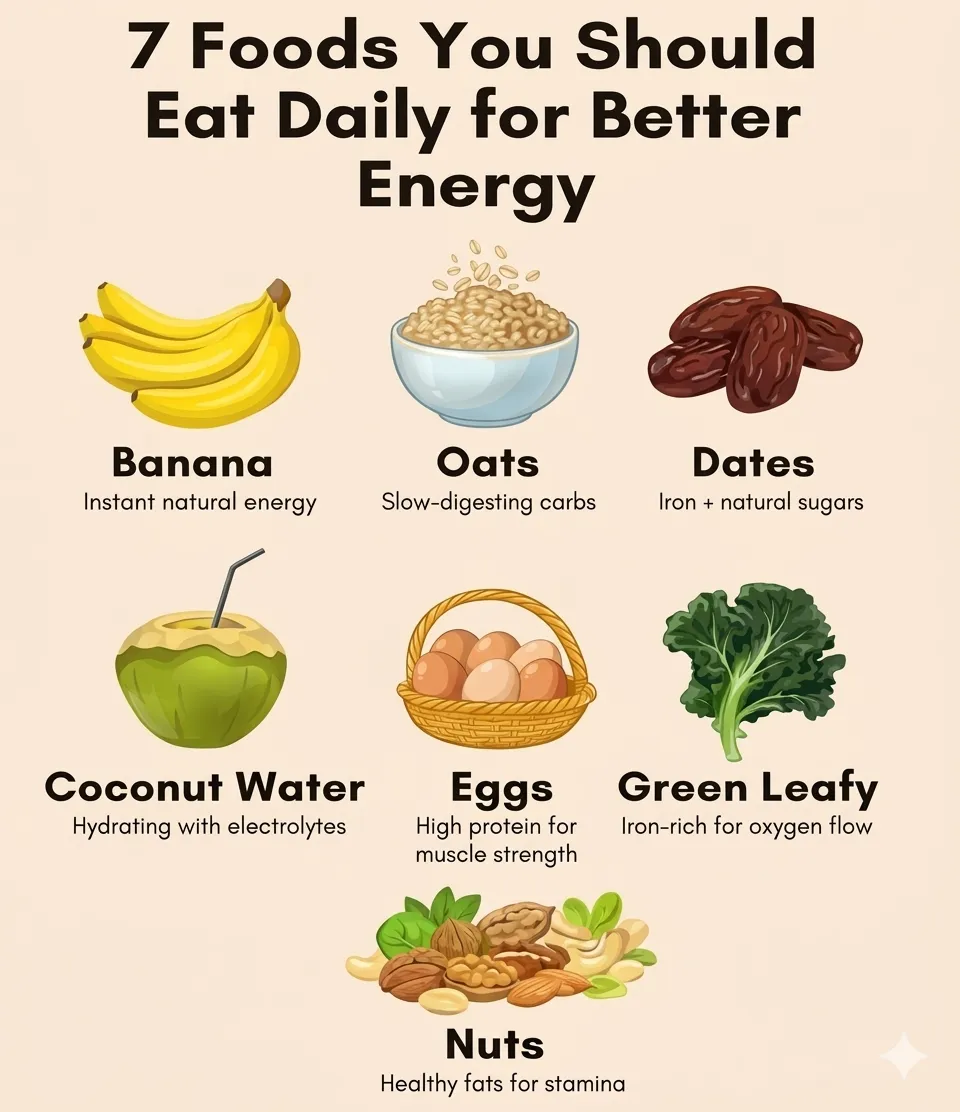
Fatigue can come from many factors, including:
- Poor sleep quality
- Stress and lifestyle habits
- Lack of physical activity
- Nutrient deficiencies
However, one of the most common causes is a poor diet. Eating too many refined sugars or skipping essential nutrients can lead to unstable blood sugar levels, causing energy spikes followed by crashes.
👉 The solution? Focus on nutrient-dense foods that provide steady, long-lasting energy.
1. Complex Carbohydrates: Your Primary Energy Source
Carbohydrates are your body’s main source of fuel. But not all carbs are created equal.
Complex carbohydrates are digested slowly, providing a steady release of energy without sudden spikes in blood sugar.
Best sources:
- Whole grains (oats, brown rice, quinoa)
- Sweet potatoes
- Beans and lentils
- Fruits like apples and berries
👉 These foods help you stay full longer and maintain consistent energy levels.
2. Protein: Stabilize Energy and Build Strength
Protein is essential for muscle repair, but it also plays a key role in maintaining stable energy levels.
It slows down digestion, preventing blood sugar spikes and keeping you feeling satisfied longer. Additionally, protein supports the production of neurotransmitters that regulate mood and focus.
Best sources:
- Lean meats (chicken, turkey)
- Fish (salmon, tuna)
- Eggs
- Greek yogurt and cottage cheese
- Plant-based proteins (lentils, chickpeas, tofu)
👉 Including protein in every meal helps prevent energy dips.
3. Healthy Fats: Long-Lasting Fuel
Healthy fats provide slow, sustained energy and are essential for brain function and hormone balance.
Unlike carbohydrates, fats take longer to digest, making them ideal for endurance and long-lasting energy.
Best sources:
- Avocados
- Nuts and seeds (almonds, chia seeds, flaxseeds)
- Olive oil
- Fatty fish (salmon, mackerel)
👉 Adding healthy fats to your meals helps you stay energized for longer periods.
4. Vitamins and Minerals: Essential for Energy Production
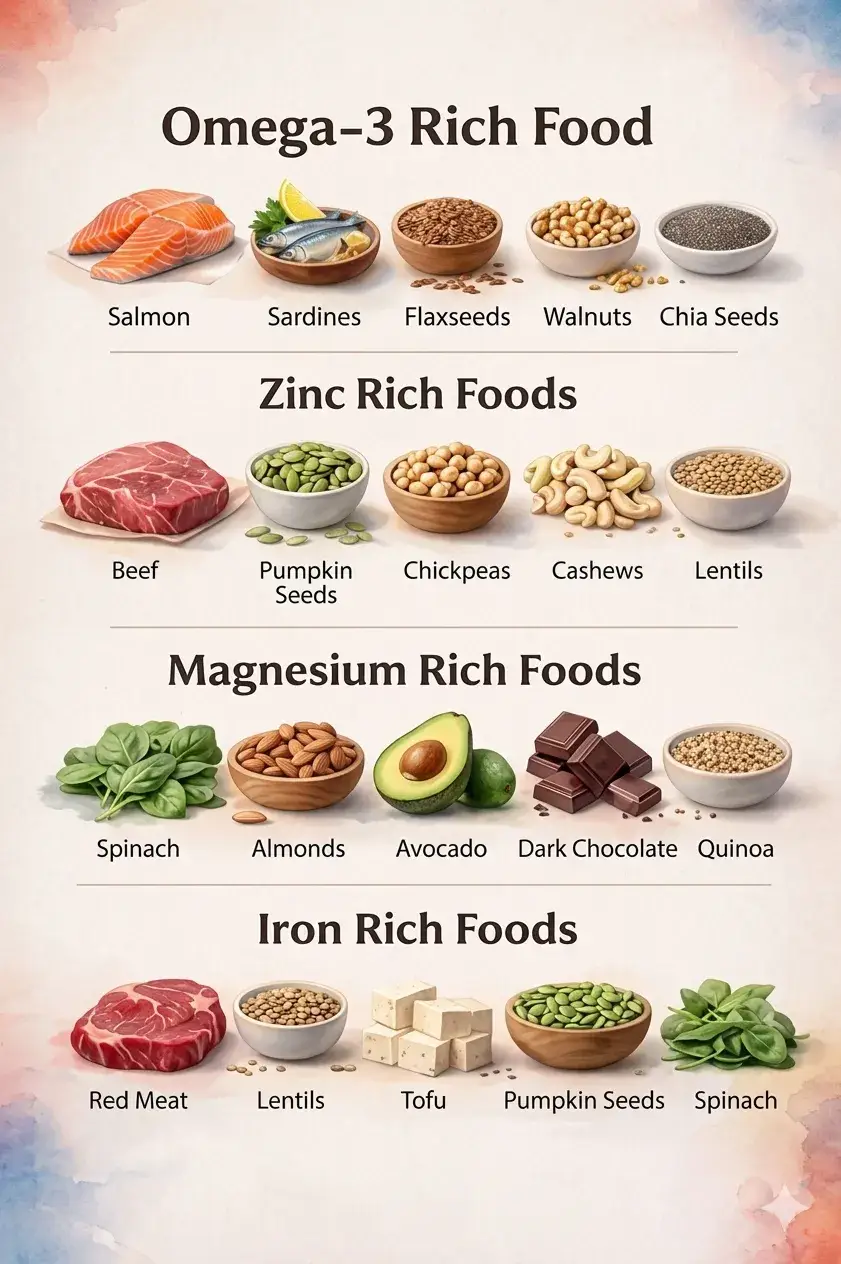
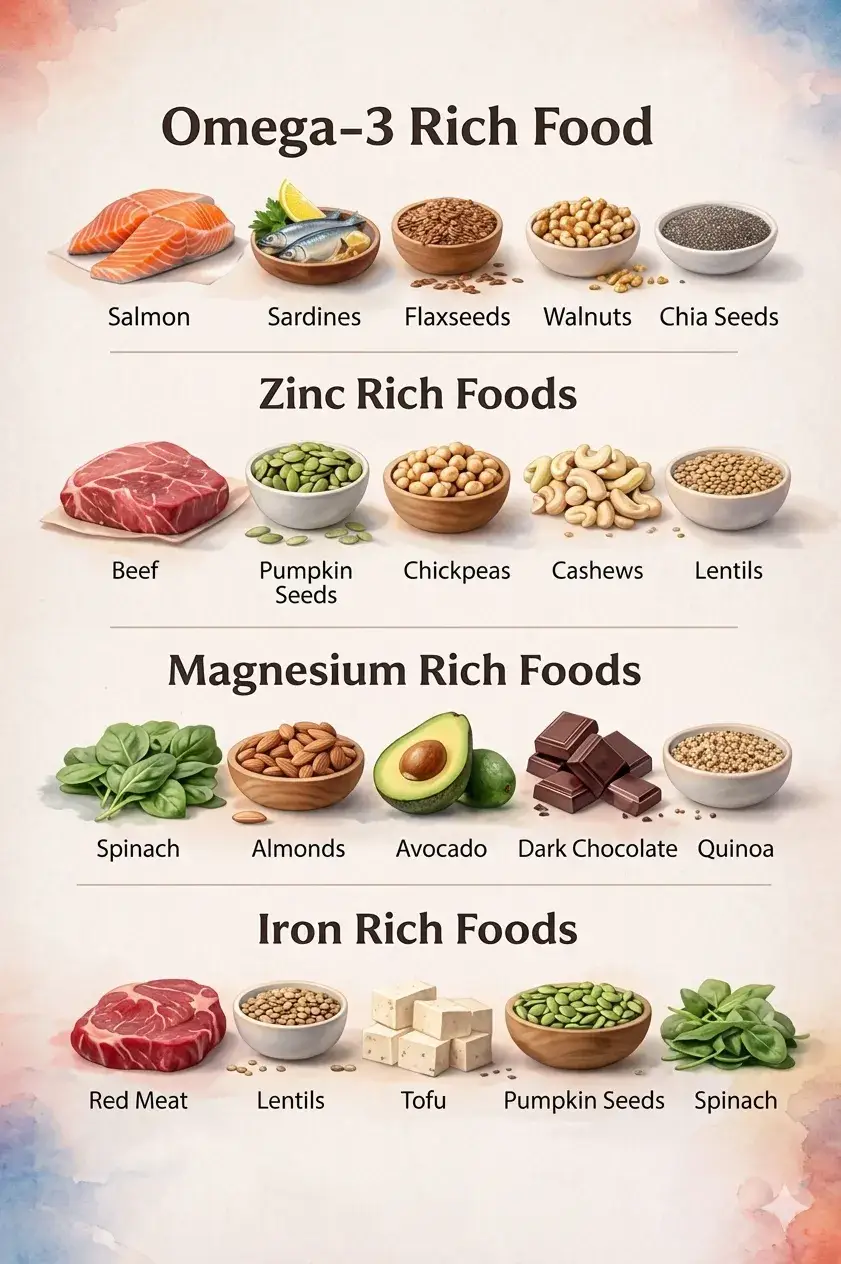
While vitamins and minerals don’t provide calories, they are crucial for converting food into usable energy.
Key nutrients for energy:
- B vitamins (B6, B12, folate): Support energy metabolism
- Iron: Helps transport oxygen in the body
- Magnesium: Supports hundreds of energy-related processes
- Calcium: Supports muscle function
Best sources:
- Leafy greens (spinach, kale)
- Red meat and poultry (for iron)
- Nuts, seeds, and legumes (for magnesium)
- Dairy or fortified plant milk (for calcium)
👉 Without these nutrients, your body cannot efficiently produce energy.
5. Hydration: The Overlooked Energy Booster
Even mild dehydration can lead to:
- Fatigue
- Poor concentration
- Reduced physical performance
Stay hydrated with:
- Water
- Herbal teas
- Coconut water (natural electrolytes)
👉 Aim to drink water consistently throughout the day—not just when you feel thirsty.
6. Meal Timing: Eat Smart for Steady Energy
It’s not only what you eat-but when you eat that matters.
Skipping meals or waiting too long between meals can cause:
- Low blood sugar
- Energy crashes
- Increased cravings
Tips for better energy:
- Eat 3 balanced meals per day
- Add 1–2 healthy snacks
- Avoid long gaps without food
👉 Regular eating keeps your metabolism active and energy stable.
Sample Energy-Boosting Meal Plan
Here’s a simple daily plan to help you stay energized:
- Breakfast: Oatmeal with chia seeds, nuts, and almond butter
- Snack: Greek yogurt with berries
- Lunch: Quinoa salad with vegetables, chickpeas, and olive oil
- Snack: Apple with a handful of almonds
- Dinner: Grilled salmon with sweet potato and roasted vegetables
Tips to Boost Energy Naturally
- Choose whole, unprocessed foods
- Limit sugar and refined carbs
- Combine carbs with protein and fats
- Stay hydrated
- Eat consistently throughout the day
Final Thoughts
Eating for energy doesn’t mean relying on caffeine or quick sugar fixes. Instead, it’s about building a balanced, nutrient-rich diet that fuels your body properly.
By including:
- Complex carbohydrates
- Lean proteins
- Healthy fats
- Essential vitamins and minerals
…you can enjoy steady energy, better focus, and improved productivity every day.
👉 If you still feel tired despite improving your diet, consider consulting a nutrition expert to identify possible deficiencies and create a personalized plan.
Start fueling your body the right way today-and experience the difference in your energy levels!
Leave a Reply