When it comes to saving money on food, one question keeps coming up: Is fast food cheaper than cooking at home?
The answer isn’t as simple as it seems. While fast food may look affordable at first glance, the real cost depends on factors like portion size, time, health, and long-term spending habits. In this SEO-optimized guide, we break down the true cost of eating out vs. cooking at home so you can make smarter decisions.
Fast Food vs. Home Cooking: What’s Really Cheaper?
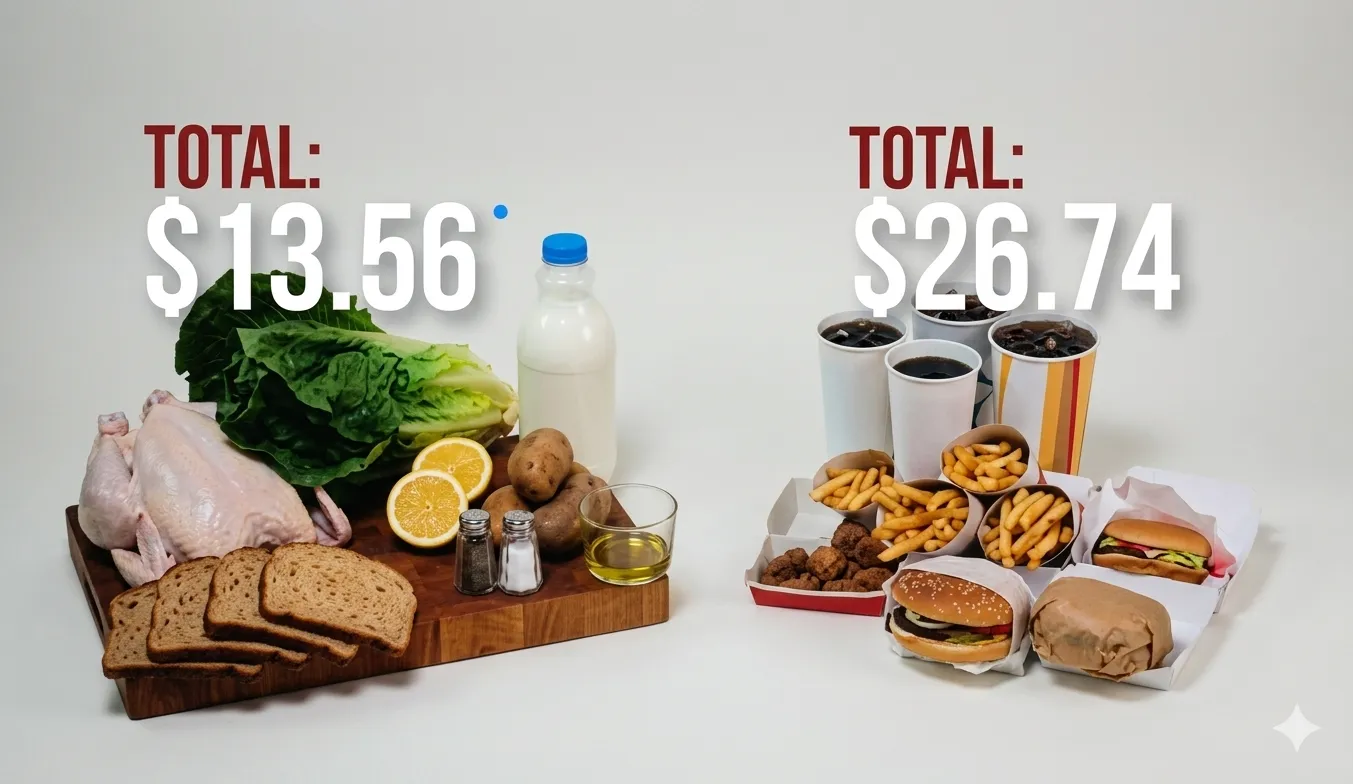
At face value, fast food often appears cheaper. You can grab a sandwich for just a few dollars, while cooking at home requires buying multiple ingredients.
Why Fast Food Seems Cheaper
- Low upfront cost per meal
- No preparation time
- Convenient for busy lifestyles
For example, making a single chicken sandwich at home can cost more because ingredients like bread, chicken, and vegetables are usually sold in bulk.
But Here’s the Catch
Cooking at home becomes more cost-effective when you consider multiple servings. Instead of one meal, you can prepare several portions from the same ingredients.
Example:
- Fast food meal: $3–$5 for one serving
- Homemade batch: $10–$15 for 4–6 servings
Over time, home cooking clearly wins in terms of value.
The Power of Leftovers and Batch Cooking
One of the biggest advantages of cooking at home is the ability to stretch your budget.
Preparing meals like:
- Roast chicken
- Chili
- Pasta dishes
…allows you to eat multiple times from a single cooking session. This reduces both cost and effort throughout the week.
Batch cooking is especially helpful for:
- Families
- Students
- Busy professionals
Restaurant Markups: Why Eating Out Costs More
When you dine out, you’re not just paying for food-paying for service, rent, staff, and experience.
Example of Price Differences
- A steak at a restaurant: $80–$100
- The same steak at a grocery store: enough for 3–4 servings
That’s a markup of up to 300% or more.
Even simple meals like pizza show the difference:
- Restaurant pizza: $20–$25
- Homemade pizza: under $6
The Hidden Cost of Time
While cooking at home is cheaper financially, it does require time.
Time Costs Include:
- Traveling to the grocery store
- Shopping and meal planning
- Cooking and cleaning
For people with tight schedules, fast food may feel “cheaper” because it saves time and effort.
Key insight:
👉 If your time is limited and valuable, convenience can outweigh cost savings.
Health Costs: The Long-Term Factor
Price isn’t the only thing to consider—your health matters too.
Studies show that frequent fast food consumption is linked to:
- Higher calorie intake
- Increased fat, sugar, and sodium consumption
- Greater risk of long-term health issues
Cooking at home allows you to:
- Control ingredients
- Manage portion sizes
- Choose healthier cooking methods
In the long run, home cooking can save you money on healthcare as well.
When Does Fast Food Make Sense?
Fast food isn’t always a bad choice. It can be practical in certain situations:
- Busy work schedules
- Travel or commuting
- Emergencies or time constraints
However, it’s best used as an occasional convenience—not a daily habit.
When Cooking at Home Is the Better Option
For most people, cooking at home is the smarter choice—especially if you want to save money and eat healthier.
It’s ideal for:
- Families
- People with dietary restrictions
- Budget-conscious individuals
- Health-focused lifestyles
With simple strategies like bulk buying and meal prep, cooking at home becomes both affordable and efficient.
Hidden Costs You Might Not Notice
1. Shrinkflation
Many food products are getting smaller while prices stay the same. This affects both grocery items and fast food portions.
2. Delivery Fees
Ordering through apps can double your meal cost due to:
- Service fees
- Delivery charges
- Tips
A $10 meal can easily become $20–$25.
3. Price Inflation
Food prices continue to rise, especially in restaurants, making eating out more expensive over time.
Smart Ways to Save Money on Food
Save Money When Cooking at Home
- Buy in bulk
- Choose seasonal ingredients
- Cook in batches
- Use leftovers effectively
- Freeze extra portions
Save Money on Fast Food
- Use apps and reward programs
- Look for discounts and coupons
- Avoid delivery services
- Skip drinks and extras
- Share meals when possible
Final Verdict: Which Is Cheaper?
Cooking at home is almost always cheaper in the long run.
However, fast food can feel more affordable in the short term due to convenience and lower upfront cost.
The Best Approach
Instead of choosing one over the other, aim for balance:
- Cook at home most of the time
- Use fast food occasionally for convenience
Leave a Reply